
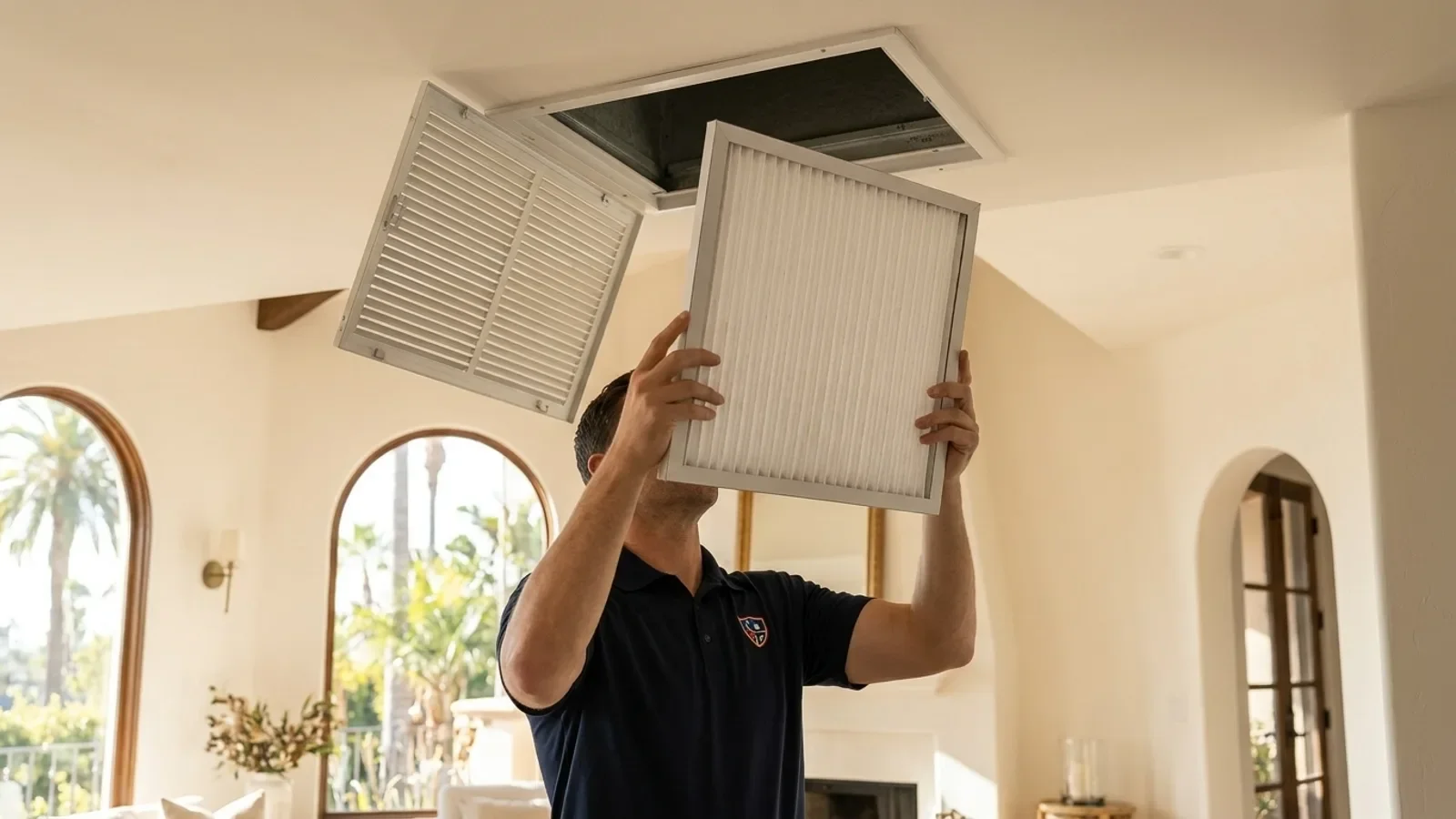
The steps to take after fire damage cleanup in Beverly Hills come down to verifying the home is truly clean, especially the air, before you settle back in. Smoke particles are fine enough to travel through ductwork and settle far from the fire itself. That’s why a final check of air, HVAC and hidden surfaces matters most on this checklist.
First of the steps to take after fire damage cleanup: confirm the work is finished
Start by checking that the work you can’t easily see was completed. It is common for a home to look finished while small details remain. Take it step by step.
- Walk every room in daylight and look at ceilings, corners and the tops of door frames for gray film or streaking.
- Open closets, cabinets and drawers and sniff for lingering smoke odor.
- Run a clean white cloth across light switch plates, outlet covers and window sills.
- Check the attic access area and the inside of the garage for residue.
- Ask for written notes on which areas were cleaned, sealed or replaced.
- Photograph each room now so you have a clear record of the finished condition.
If anything looks off, write it down. A short list makes the follow-up conversation simple.
Air quality checks after the repairs wrap up
Air quality is the part of recovery most worth a second look, because odor and fine soot can outlast the visible repairs. Nothing unusual about that. It simply takes attention.
- Replace the HVAC filter before running the system for long periods.
- Inspect supply and return vent covers for dark residue around the edges.
- Note whether smoke odor returns when the heat or air conditioning turns on.
- Keep windows open on mild, low-wind days to let fresh air move through.
- Avoid masking odors with heavy fragrances, which can hide a problem that still needs attention.
- Ask whether ductwork was assessed as part of the cleanup.
Once structural work is done, keeping air standards steady is where expert fire damage restoration earns its value, since smoke residue in ducts and wall cavities isn’t always obvious. For a closer look at where odor tends to hide, see this guide to the places smoke odor can linger.
Belongings, documents and records
Your paperwork matters as much as your walls. Good records make insurance and future repairs far easier.
- Keep every invoice, scope of work and photo from the restoration in one folder.
- Store a digital copy of that folder somewhere outside the home.
- List any items that were cleaned off-site and confirm each one came back.
- Inspect returned fabrics, books and electronics for odor or residue before putting them away.
- Set aside anything that still smells of smoke and raise it with your restoration contact.
- Update your home inventory to reflect replaced items.
Clear records keep everyone on the same page.
Frequently Asked Questions about life after fire cleanup
How to clean soot?
Light, dry soot on a hard surface can sometimes be lifted with a dry chemical sponge, used gently in one direction without water, which can smear it. Heavier soot, oily residue, or soot on porous materials and fabric is best left to a professional, because rubbing often pushes it deeper.
How would you respond to an incident of fire?
Get everyone out safely and call 911 first; property comes second. Once the fire department says it’s safe, document the damage with photos, contact your insurer, and reach out to a restoration professional to secure and assess the property.
How long does smoke odor take to go away after cleanup?
It depends on how deeply smoke reached into ducts, insulation and porous materials, so there’s no single timeline. Odor that keeps returning usually points to a source that still needs attention rather than something that will fade on its own.
What should I watch for in the weeks after I move back in?
Watch for returning odor, new discoloration on walls or ceilings, and dark marks around vents. Any of these is worth reporting, and this list of signs of soot damage that’s easy to miss can help you spot them.
Beverly Hills-specific considerations
Beverly Hills homes bring their own details to recovery, from hillside lots to older architecture. Keep these in mind.
- Account for wildfire smoke if your home sits near the hills or canyon areas, since outside smoke can reach a property that never burned.
- Check original plaster, wood paneling and built-ins in older homes, which can hold odor more than newer drywall.
- Review large or multi-zone HVAC systems zone by zone, since one zone can stay dirty while others are clean.
- Confirm permit requirements with the City of Beverly Hills before any further remodeling, as rules vary by project.
- Clear dry brush and leaf litter from roof edges, gutters and vents ahead of the Santa Ana wind season, which typically runs through fall and winter.
- Ask about the condition of tile or slate roofs and roof vents if embers or smoke reached the roofline.
Late fall is a sensible time for that outdoor tidying. Winter rains here usually start soon after, so finishing exterior checks now is practical.
Talking with your restoration team
A short, clear conversation at the end of a project helps close out loose ends. You don’t need technical knowledge to ask good questions.
- Ask which areas were tested or inspected for remaining residue.
- Request a walkthrough so you can point out anything that concerns you.
- Confirm who to call if odor or staining shows up later.
- Ask what maintenance, such as filter changes, you should handle yourself.
- Keep a copy of any written sign-off on completed work.
For a fuller list, these questions worth asking your restoration contractor are a helpful starting point. It’s also worth reading how fire restoration works in Beverly Hills so you know what a complete job typically includes.
Quick checklist
- Walk every room and note any residue or odor.
- Change the HVAC filter and watch for odor when it runs.
- Keep all invoices, photos and scopes of work together.
- Check returned belongings before storing them.
- Clear brush and debris around the roof and vents.
- Report anything that reappears to your restoration contact.
Recovery is a process, and it’s fine to take it one step at a time. If something on this list still doesn’t look or smell right, reach out to Tech Solution Restoration 1 about a follow-up look at your fire-damaged property.