
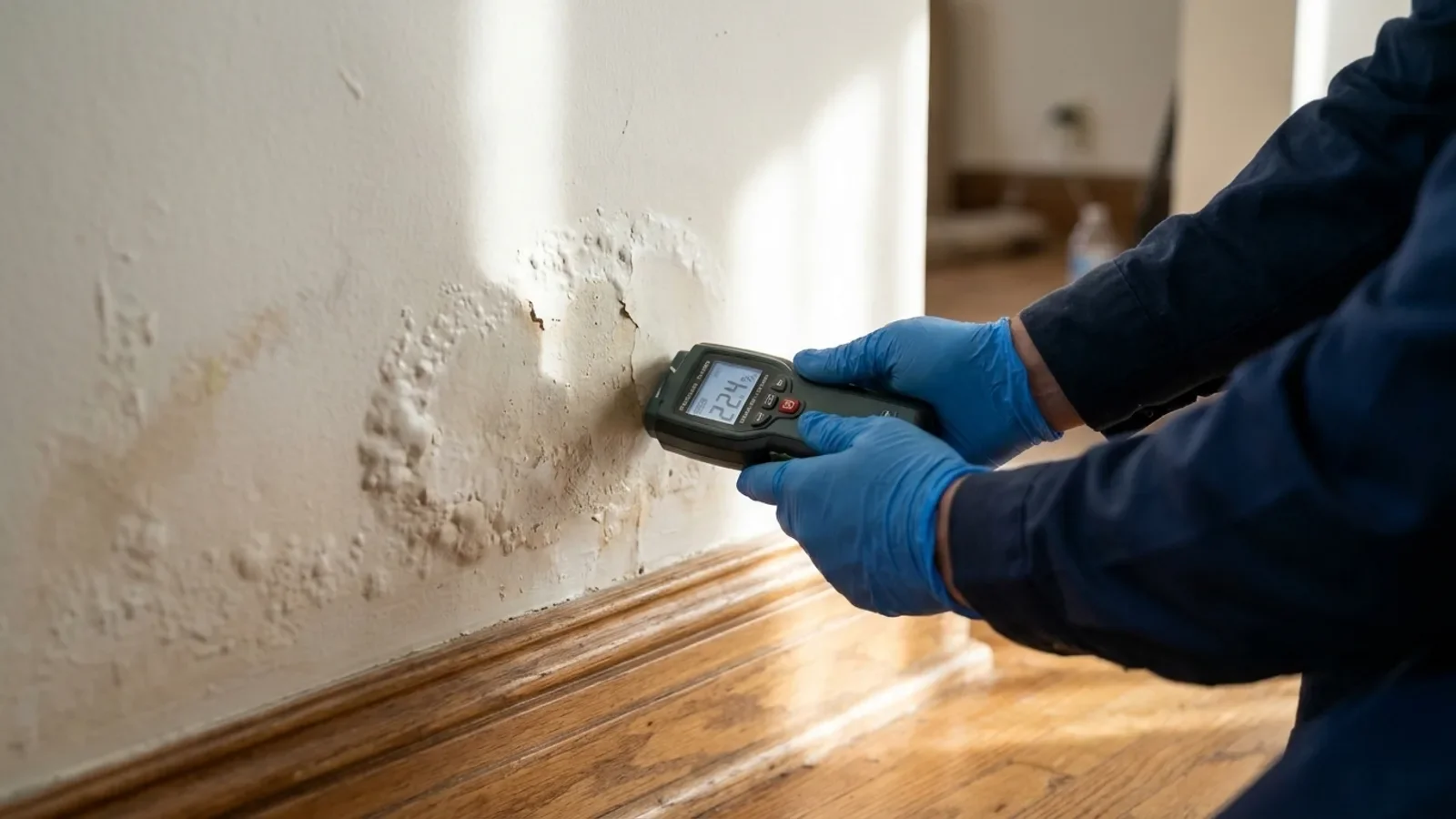
The clearest hidden mold in walls signs in Beverly Hills homes include a persistent musty odor, bubbling or peeling paint, faint yellowish stains on drywall, and warped baseboards near plumbing lines. You might walk into a quiet downstairs guest bath or open a hallway linen closet and notice an earthy, damp smell. It lingers even when the windows are shut. Meanwhile, the tile looks spotless.
How to tell if mold is behind your walls?
You can tell if mold is behind your walls by paying close attention to sensory clues and subtle changes in the wall surface itself. You cannot see inside a closed wall cavity without opening it. Your nose and eyes must work together to read what the drywall or plaster is reacting to. It is common to wonder if an odd mark is just aging paint. Taking a calm, methodical look at the clues helps separate normal wear from trapped moisture.
The first and most reliable indicator is scent. Active fungal growth releases microbial volatile organic compounds, which have a distinct earthy, damp smell similar to wet cardboard or a forgotten pile of damp towels. You might clean a room thoroughly, yet that smell returns within a few hours. In that case, the source is often sitting behind the drywall paper or under the trim rather than on the visible floor. You do not need to panic when you notice this. It simply means moisture has settled in an unventilated pocket.
Next, look at the texture of the wall under angled light. Hold a flashlight flat against the wall so the beam skims across the paint. When moisture collects behind a wall, the paper backing of the drywall absorbs it and begins to swell. You may notice the paint looks slightly blistered, dimpled, or wavy. It might still feel dry to a quick touch. Baseboards also give helpful clues. If the wooden trim at the bottom of a wall starts pulling away from the plaster, or if the caulk line cracks and turns dark, water has likely wicked up from the sill plate below.
You can also check the wall temperature and density gently. Press the flat of your palm against the suspect area and compare it to an interior wall far away from any pipes. A damp wall cavity often feels noticeably cooler. If the drywall feels soft or yields slightly when you press gently with a knuckle, the gypsum core has absorbed water. You can follow a structured home mold inspection checklist for Beverly Hills properties to walk through each room systematically without missing these quiet indicators.
What are the primary hidden mold in walls signs to watch for on paint and plaster?
The primary hidden mold in walls signs on paint and plaster are pale yellow or brownish water rings, chalky white deposits, and localized peeling or cracking that happens away from windows. These surface shifts happen because water travels through porous building materials by capillary action. It pushes minerals and stains outward toward the living space long before any dark spots break through the exterior paint layer.
Latex and oil paints act as a partial barrier. A colony growing on the back side of a drywall sheet can stay out of sight while the paint slowly loses its grip. Take a close look at corners, ceiling joints, and the walls directly behind bathroom vanities. You might see tiny pinpricks of gray, tan, or black dotting a seam where two sheets of drywall meet. Homeowners often mistake these early dots for household dust or scuff marks. When you wipe dust, it comes off easily on a dry cloth and stays gone. Discoloration from inside the wall behaves differently. The shadow remains beneath the paint finish or returns in the exact same pattern after a few weeks.
Plaster walls, which are common in older residences, show moisture differently than modern drywall. Plaster is denser and more alkaline, yet it often develops a flaky, powdery texture called efflorescence when dampness migrates through it. You might see a fine white crust forming along a lower wall. You may also notice the plaster cracking in a web-like pattern while the surrounding paint curls outward like dried leaves. Wallpaper offers another clear signal. If the seams of wallpaper begin to lift, curl, or develop faint pink, orange, or gray blotches, moisture trapped in the wall cavity is reacting with the wallpaper paste. Note these surface changes step by step. This gives you a clear map of where moisture is sitting so a professional can test the exact spot without guesswork.
Why do Beverly Hills homes develop concealed wall moisture?
Beverly Hills homes often develop concealed wall moisture due to a combination of historic architectural features, dense privacy landscaping placed close to exterior walls, and complex multi-zone plumbing and air conditioning systems. Southern California enjoys mild, dry weather for much of the year. Still, the microclimates created around hillside estates and classic residences introduce constant water sources against and inside the building envelope.
In neighborhoods from the Flats up into Trousdale Estates and the winding roads north of Sunset Boulevard, residential architecture spans nearly a century. Classic 1920s Spanish Colonial Revival and Mediterranean homes frequently feature thick stucco exteriors over wood lath and plaster. Over decades, small hairline cracks can form in exterior stucco. Lush perimeter hedges, ficus trees, and tropical foundation plantings are watered daily by automated irrigation systems. Sprinklers often spray directly against those stucco walls. The wall absorbs the water. Because dense shade from mature foliage blocks the sun, the interior wall cavity stays damp and cool. That quiet dampness is all it takes for spores to settle.
Later mid-century modern properties and expansive contemporary builds bring a different set of moisture dynamics. Flat roofs, parapet walls, and recessed ceiling pockets can collect pine needles or palm fronds around scuppers and internal roof drains. Late autumn or winter rainstorms pass through the Los Angeles basin. During a storm, a partially blocked internal downspout running inside a framing bay can leak slowly into an interior wall without ever showing a drip on the ceiling. Furthermore, large homes often have multiple air handlers tucked into tight attic spaces or interior closets. A secondary condensate drain pan might clog during a warm autumn Santa Ana wind event while the air conditioning is running hard. Moisture can then trickle down the inside of an interior partition wall for weeks before anyone notices a faint smell in the hallway. Understanding how professional mold removal addresses both the hidden moisture pocket and the affected framing helps you plan the right repair when these local building quirks show up.
Where do hidden moisture pockets usually form inside a house?
Hidden moisture pockets usually form inside a house along shared plumbing walls, underneath window sills, behind kitchen cabinetry, and around air conditioning ductwork running through enclosed chases. Warm indoor air sometimes meets a cool, unventilated surface. Other times, a slow drip escapes a pressurized pipe. In either case, the enclosed space between wall studs traps that humidity like a sealed greenhouse.
You can inspect the most likely areas by walking through your home and tracing where water travels. Take it step by step and check these common zones:
- Shared bathroom walls: Check the bedroom or closet wall that sits directly behind a shower valve or bathtub drain. The tiled side is waterproof. However, any slow leak from a worn valve stem or loose drain shoe will soak into the drywall on the opposite side of the studs.
- Behind kitchen appliances and lower cabinets: Ice maker supply lines behind refrigerators and dishwasher drain hoses can weep tiny drops of water over months. The moisture wicks into the bottom edge of the drywall hidden behind the cabinet boxes.
- Beneath large windows and French doors: Metal or wood window frames can collect condensation or let wind-driven rain slip past aged exterior caulking. Run your fingers along the drywall just below the bottom corners of the window trim. Feel for softness or bubbling paint.
- Laundry room pipe chases: Recessed washing machine hookup boxes hold hot and cold shutoff valves plus a standpipe drain. Slow seepage at the threaded connections often drops straight down inside the wall cavity without spilling onto the laundry room floor.
- HVAC return chases and closet plenums: When cooled air moves through poorly insulated ducts inside a warm wall cavity, condensation can form on the outside of the metal duct. It then drips onto the wood framing below.
Checking these quiet corners gives you useful facts. Everything becomes much easier to handle once you know which room holds the dampness.
What are the common symptoms of mold exposure in humans?
Public health agencies note that the common symptoms associated with indoor dampness and mold exposure typically involve upper respiratory irritation. This includes a stuffy nose, sneezing, coughing, or throat discomfort, along with watery eyes or skin irritation. Some people who already have respiratory sensitivities or allergies may notice these everyday discomforts feel more noticeable when spending time in a damp room. According to the Centers for Disease Control and Prevention guidance on mold, reactions vary widely from one person to another. Anyone experiencing persistent physical concerns should consult a qualified healthcare provider for personal medical advice.
From a home care perspective, noticing that a certain bedroom or home office feels stuffy or uncomfortable is simply a cue to look closer at the indoor environment. You do not need to jump to alarming conclusions. Often, a room with stagnant air and high relative humidity holds household dust, pollen, and dampness all at once. Keep your focus on what you can verify in the building structure. Check relative humidity with a small digital hygrometer and inspect nearby plumbing walls to keep the process grounded and practical. Indoor humidity might stay consistently above sixty percent in a specific room. Locating the moisture source and drying out the space helps restore a fresh, comfortable atmosphere.
What are the 17 signs of mold illness?
Various informal checklists circulate online listing 17 signs of mold illness ranging from fatigue and headaches to difficulty concentrating. However, mainstream medical organizations do not define a standardized condition based on a specific seventeen-point symptom list. Everyday feelings like tiredness, sinus pressure, or trouble sleeping can stem from many ordinary causes. Because of this, medical doctors evaluate health concerns directly rather than relying on internet checklists. If you or a family member do not feel well, speaking with a physician is always the safest and clearest path.
When you read long symptom lists online, it is very easy to feel overwhelmed or worried about your house. Take a breath and step back from the alarming language. Your home is a physical structure that responds to straightforward building science. Whether an indoor air issue is small or large, the practical solution for the property remains the exact same. Locate any trapped moisture and stop the water source. Then, have damaged materials safely cleaned or replaced. Focusing on observable building clues like damp drywall, musty smells, or past plumbing leaks takes the mystery out of the situation. It puts you back in control.
What kills black mold naturally?
On hard, non-porous surfaces like glazed bathroom tile or glass, simple household solutions such as plain white distilled vinegar or mild detergent and water can help wipe away small surface spots. Still, public agencies like the U.S. Environmental Protection Agency mold cleanup guide emphasize that fixing the water problem and thoroughly drying the area is what actually stops fungal growth. Natural liquids can clean a slick countertop. They cannot reach or resolve mold growing inside a porous wall cavity.
It helps to understand why porous wall materials behave differently than a ceramic sink. Drywall, wood studs, and insulation are full of microscopic air pockets. When mold grows behind a wall, its root-like filaments, called hyphae, grow directly into the paper facing and the gypsum core. Spraying vinegar, tea tree oil, or baking soda solutions onto the painted front of a wall will not penetrate through to the back side of the drywall board where the colony sits. Even if you spray a liquid directly onto raw drywall, adding extra moisture to an already damp board can sometimes feed the problem further. It also leaves dormant spores and allergens behind.
Trying to scrub or spray inside an open wall cavity without containment also stirs millions of tiny spores into the living space. This allows them to float through the air conditioning system into other rooms. That is why industry standards for structural wall cavities do not rely on household sprays. Instead, proper care involves setting up simple plastic containment to protect your living areas and safely removing the water-damaged portion of the drywall. Technicians then dry the wood framing completely and clean the solid wood with HEPA vacuuming and appropriate antimicrobial methods. Once the cavity is dry and clean, learning about safe mold removal and wall restoration and following practical habits for preventing mold recurrence in Beverly Hills homes keeps the repaired wall dry for the long term.
When should you call a professional for suspected wall mold?
You should call a qualified professional whenever signs point to moisture or fungal growth hidden inside an enclosed wall cavity rather than minor condensation on shower tile. Opening a wall without proper airflow control can spread dust and spores across clean rooms. Bringing in trained help protects your indoor air while getting to the root of the dampness.
Consider reaching out for an expert evaluation in any of these situations:
- A persistent musty odor with no visible source: You can smell dampness in a room, hallway, or closet, yet every visible floor, ceiling, and fixture looks completely clean.
- History of a slow plumbing or roof leak: A pipe dripped inside a wall, a toilet overflowed, or roof water entered the framing. Meanwhile, the inner wall cavity was never opened or mechanically dried within forty-eight hours.
- Peeling, blistering, or soft drywall: The wall surface feels cool, spongy, or uneven, or baseboards are warping and separating from the plaster.
- Visible spotting exceeds a small patch: Discoloration covers an area larger than a few square feet, or tiny dark dots are emerging along multiple drywall seams and electrical outlets.
A professional uses non-invasive tools like pinless moisture meters and thermal imaging cameras to trace cool, damp zones behind the paint before making a single cut. When you know what to look for in choosing a mold remediation contractor, you can ask clear questions about how they contain the work area and filter the air. You can also verify that the wood framing is completely dry before any new drywall goes up. Everything can be handled cleanly and calmly, one step at a time.
If you notice musty odors or wall surface changes in your Beverly Hills home and want a clear, thorough evaluation, reach out to Tech Solution Restoration 1 to schedule an inspection and discuss your next steps.
This article is general information for educational purposes only. It is not medical, dental or veterinary advice, a diagnosis or a treatment recommendation, and it does not replace an examination by a licensed professional. If you have a health concern, contact a licensed healthcare provider. In an emergency, call your local emergency number (911 in the United States) or go to the nearest emergency room.