
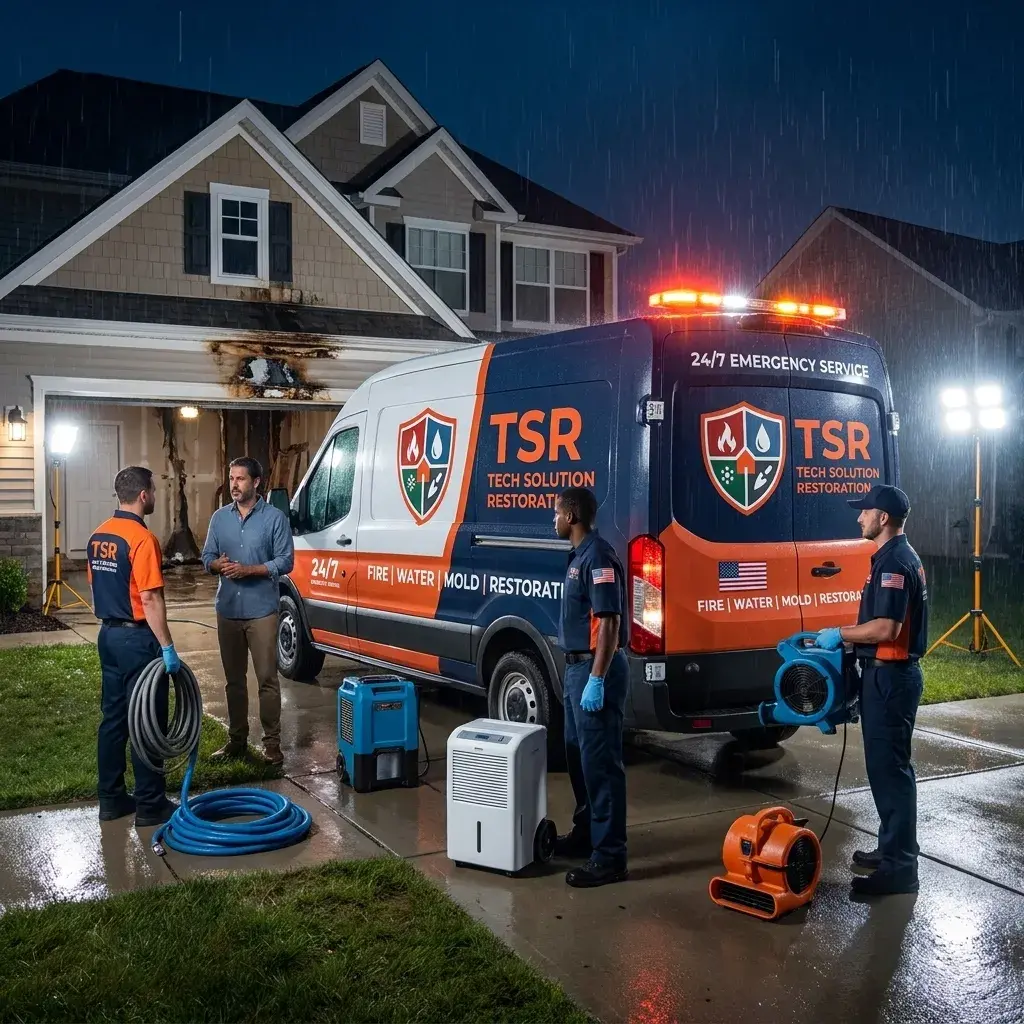
Luxury home water damage restoration is a different job from drying out an average house, and after more than 15 years in this work I can tell you the difference shows up in the first ten minutes on site. A failed supply line in a Bel Air estate and a slow leak behind a Brentwood bathroom wall look nothing alike, yet they share one problem: the materials involved were chosen with care, installed by specialists, and are rarely cheap or quick to replace.
This guide is for owners, estate managers, and property managers of high-end homes in Beverly Hills and across the Westside. I’ll explain what changes when the house is larger and the finishes are custom, what I’d ask you to do in the first hour, and where owners most often lose finishes they could have kept.
Why Luxury Home Water Damage Restoration Is Different
Size is the obvious difference. A 9,000-square-foot house has more floors, more rooms, and more hidden paths for water to travel before anyone notices a problem.
The less obvious difference is the plumbing itself. Larger homes tend to have several water heaters, recirculating hot water lines, steam showers, radiant floor heating, pool equipment, and extensive irrigation. Every one of those is another place where something can fail.
Then there is the cost of getting it wrong. In a standard home, a rushed drying job might mean replacing a few sheets of drywall. In a custom home, it can mean losing a stone floor that was sourced from abroad, or cabinetry that took months to build.
That is why I treat these projects as preservation work first. Before anything gets torn out, I want to know what can be saved.
Finishes That Can’t Simply Be Swapped Out
Every finish reacts to water in its own way, and proper luxury home water damage restoration accounts for each one.
- Hardwood: Wide-plank and reclaimed floors swell as they absorb moisture. If they dry too fast or unevenly, they cup or buckle for good, so controlled drying matters more than speed alone.
- Natural stone and tile: Stone is porous and can hold moisture, and the setting bed and subfloor beneath it often stay wet long after the surface looks fine.
- Plaster and specialty wall finishes: Venetian plaster, lacquer, and fabric or grasscloth wallcoverings can soften, stain, or release if moisture sits behind them.
- Custom millwork and cabinetry: Veneers and built-ins can delaminate or warp weeks after a leak if the moisture inside them was never dried out.
I would rather spend an extra day drying something properly than hand an owner a replacement estimate for materials that could have been saved. Sometimes replacement really is the only answer, and when it is, I’ll tell you plainly.
The Leak Nobody Hears: Vacant and Second Homes
Some of the largest losses I see are not dramatic bursts. They are small failures in homes nobody is living in that week.
An owner is traveling, a guest house sits empty, or a property is between tenants. A toilet supply line or a water heater starts leaking, and it runs for days before the next person walks in. By then, water has soaked through subfloors and into the ceiling of the room below.
If your property is ever unoccupied for stretches, two things help. Have someone walk the house on a regular schedule, and consider leak sensors or an automatic shutoff valve on the main line. Neither is foolproof, but both shorten the time water has to work.
Hillside Homes, Basements, and Below-Grade Spaces
Luxury home water damage restoration in hillside neighborhoods has its own challenges. Homes in Bel Air, Trousdale Estates, and the Hollywood Hills are often built on slopes with several levels, and water from a failure on an upper floor follows gravity through floor assemblies and wall cavities to the levels below.
Below-grade rooms add another layer. Wine cellars, home theaters, gyms, and storage rooms are common in larger homes, and they sit where water tends to collect and dries slowest. They also hold the kinds of contents owners care about most.
Storm-related water is a separate problem. If rain is getting in through a damaged roof or opening, the first job is to close it. Our emergency roof tarp and board-up service exists for exactly that situation, so the structure is protected while the rest of the work is planned.
How Moisture Mapping and Structural Drying Work
The part of a restoration that protects your house is also the part you can’t see. Luxury home water damage restoration follows a sequence, and skipping steps is where problems begin.
- Stop the source. Nothing dries while water is still coming in.
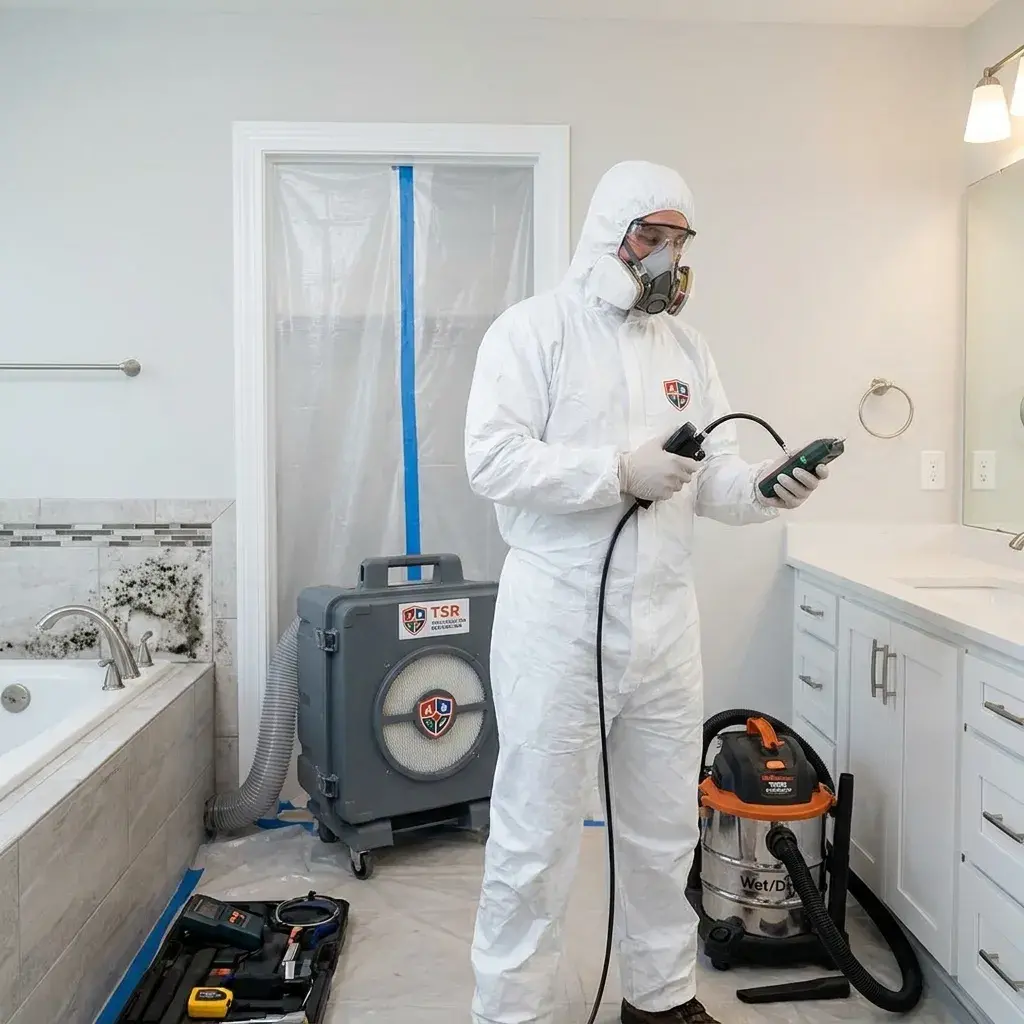
- Map the moisture. Moisture readings show how far water has traveled through floors, walls, and ceilings, including areas that look completely normal.
- Extract standing water. Removing bulk water quickly reduces how much has to be dried out of the materials.
- Dry in a controlled way. Air movement and dehumidification are set up for the specific materials involved, with gentler handling for sensitive finishes.
- Monitor daily. Readings are checked every day, and equipment is adjusted or removed as areas reach normal levels.
- Confirm dry before closing up. Walls and floors are not sealed or rebuilt until the readings say they are dry.
The IICRC publishes the industry standards that guide drying and restoration practice, and it is a useful reference if you want to understand what a professional process should look like. Our full water damage restoration service follows this same sequence.
Protecting Furniture, Art, and Personal Property
Water damage is rarely only about the building. Rugs, upholstered furniture, books, electronics, and wine are all vulnerable, and they need attention while the structure is being dried, not after.
Moving contents out of an affected area, or out of the house entirely, protects them and gives crews room to work. Our packout and contents restoration service handles that process.
One honest note: for fine art, antiques, and rare collectibles, a specialist conservator is often the right person. If something falls in that category, I’ll say so and help you get it to the right hands instead of guessing.
When Water Damage Turns Into a Mold Problem
Moisture that stays in a building long enough invites mold, and the timeline is shorter than most owners expect. The EPA’s mold guidance points to drying wet materials within a day or two as the key to preventing growth.
That is one reason luxury home water damage restoration needs a plan from the first hour. In a large home that window is hard to meet otherwise, because water may have reached rooms nobody has checked. If you notice a musty smell, staining, or bubbling paint days after a leak, that is worth acting on. Our mold remediation team can inspect and address it, and the sooner someone looks, the smaller the job usually is.
Rebuilding to the Standard Your Home Deserves
When materials can’t be saved, luxury home water damage restoration moves into rebuilding. I don’t treat this as a separate chore, because a repair that doesn’t match the rest of the house defeats the purpose of doing the restoration well.
Our reconstruction service covers replacing and finishing what had to be removed. If you have a designer, architect, or general contractor, I’m happy to coordinate with them so finishes, sequencing, and scope are agreed up front.
Insurance, Documentation, and Working With Property Managers
I can’t tell you what your policy covers, and your carrier is the right source for that. What I can tell you is that good records make everything easier. Take photos of the damage before anything is moved, keep receipts, and notify your carrier early.
On our side, we document moisture readings and the work performed so there is a clear record of what happened. For estate managers, property managers, and HOAs, we coordinate access, scheduling, and updates so you are not chasing information. Tell us what matters, whether that is privacy, staff access, or timing, and we’ll plan around it.
What to Do in the First Hour
If you are looking at water right now, this is the order I’d follow.
- Shut off the main water supply. Know where this valve is before you ever need it.
- If you can do it safely, turn off power to the affected area. Do not walk through standing water near outlets, appliances, or electronics.
- Photograph the damage, then move small valuables out of the way if it’s safe.
- Call for help. Our 24/7 emergency response line is answered around the clock.
Preventing the Next One
You can’t prevent every failure, but a few habits lower the odds and the damage.
- Install leak sensors near water heaters, under sinks, and by appliances, and consider an automatic shutoff valve.
- Have supply lines, water heaters, and irrigation checked on a regular schedule.
- Check roof drainage and gutters before the rainy season.
- Set up a walk-through routine for any property that sits empty for stretches.
Where We Work: Beverly Hills, the Westside, and Beyond
We provide luxury home water damage restoration from our Beverly Hills and Chatsworth locations. On the Westside, that includes Beverly Hills, Bel Air, Brentwood, Pacific Palisades, Century City, Westwood, West Hollywood, Hollywood Hills West, and Santa Monica.
In the San Fernando Valley, we serve owners in Encino, Calabasas, Hidden Hills, Porter Ranch, and surrounding communities. You can see the full list on our service areas page.
Frequently Asked Questions
How quickly should luxury home water damage restoration start?
As soon as possible, ideally the same day. Water keeps spreading and materials keep absorbing it, so every hour you wait can add to the scope. We are available 24 hours a day, seven days a week.
Can hardwood, stone, and plaster really be saved?
Often, yes, if the response is fast and the drying is controlled. It depends on how long the water sat, how much the material absorbed, and the finish itself. After an assessment I’ll tell you plainly what can be saved and what can’t.
Do you handle furniture, rugs, and other contents?
Yes. We offer packout and contents restoration to protect belongings during the work. For fine art and rare antiques, I’ll recommend a specialist conservator when that is the right call.
Will you coordinate with my property manager, designer, or contractor?
Yes. We regularly work with property managers and HOAs, and I’m glad to coordinate with your designer or general contractor so everyone is working from the same plan.
How much does water damage restoration cost for a large home?
It depends entirely on how far the water traveled, which materials are affected, and what needs to be rebuilt, so I can’t give an honest number without an assessment. I’d rather look at the property than guess.
Is help available at night and on weekends?
Yes. Water damage doesn’t follow business hours, and neither do we.
Talk to Us Before It Gets Worse
If your home needs luxury home water damage restoration now, or you want to understand your options before something happens, I’d be glad to talk it through.
Call our team any time at 424-404-1450, or reach us through the contact page.
Contact us 747-966-3021 Chatsworth, CA
Tech Solution Restoration: available 24/7 for luxury home water damage restoration in Beverly Hills and across the Westside.