
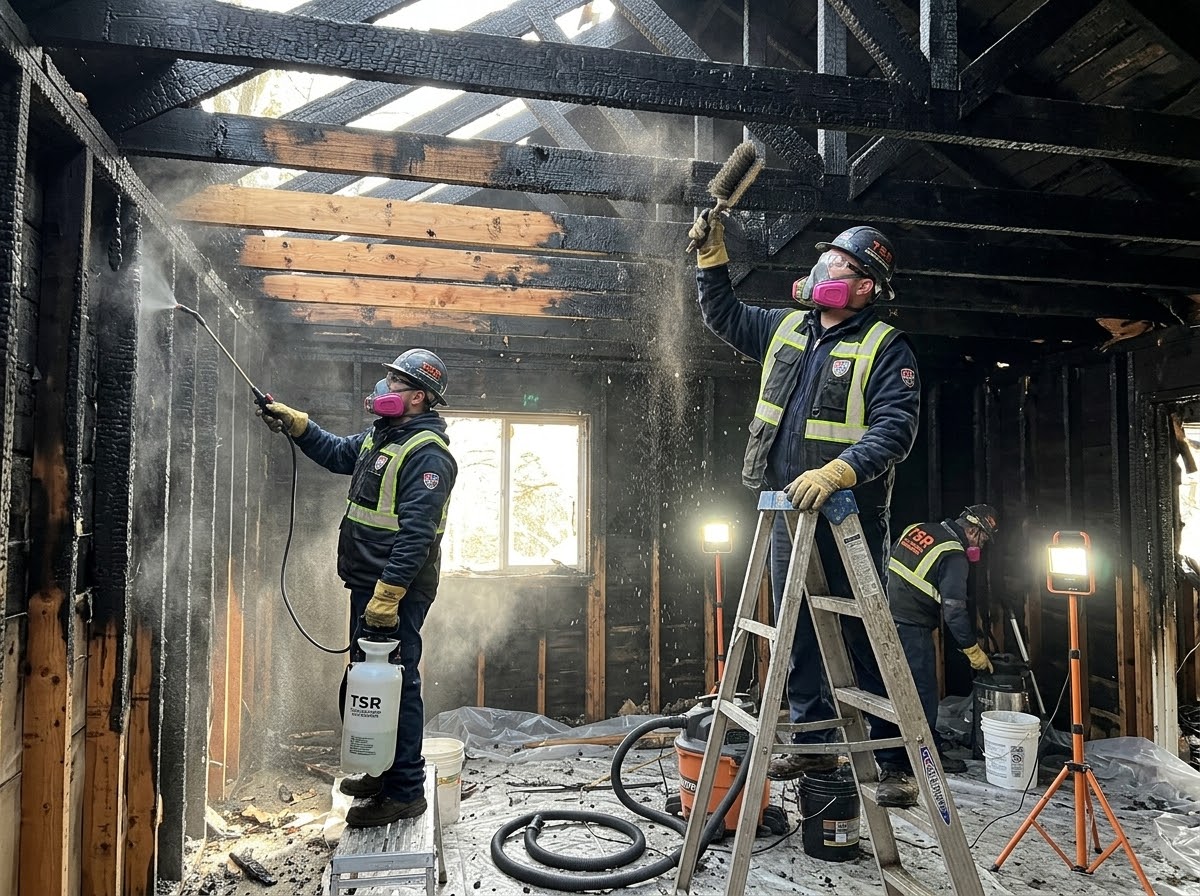
Smoke damage in a condo has a twist that single-family homeowners never deal with: your unit may not have burned at all, and it can still need real restoration. A fire two doors down, or on the floor below, can leave your home smelling like smoke and coated with fine residue, even if you never saw a flame.
I’ve worked with owners and property managers in this exact situation, and the confusion is always the same. Who’s responsible, who do I call, and why does my place smell like a campfire when the fire wasn’t in my unit? Here’s how I explain it.
How Smoke Gets Into Units That Didn’t Burn
Condo buildings are connected in ways that aren’t obvious until smoke starts moving through them:
- Shared HVAC and ductwork. If air systems are connected, smoke can be pulled into neighboring units.
- Wall and ceiling cavities. Smoke moves through gaps around pipes, wiring, and framing between units.
- Plumbing and electrical chases. These vertical channels act like chimneys.
- Hallways and doors. Smoke leaks under and around doors into common areas and then into other units.
That’s why smoke damage in a condo often reaches well beyond the unit where the fire started.
What Smoke Damage in a Condo Looks Like
- A smoke smell that stays even after the air clears
- A thin film of soot or discoloration on walls, ceilings, and windowsills
- Residue on belongings, especially in closets and on shelves
- Smoke smell that seems to come from vents or outlets
You may not see much, and that’s what makes it easy to underestimate. Smoke odor often sits in porous materials like drywall, insulation, and fabrics well after the visible residue is gone.
The HOA and Insurance Question
I’m not an attorney or an insurance adviser, and what’s covered depends on your building’s governing documents and your policies. Generally, the HOA’s master policy covers certain parts of the building, while a unit owner’s own policy covers things inside the unit. The line between them can be confusing, so I’d suggest asking your property manager and your insurance agent early.
What I can say is that good records help every party. Take photos of any residue or damage, keep a list of affected belongings, and keep copies of every notice you send or receive.
What to Do If the Fire Was Next Door
- Wait for the building to be cleared. Don’t re-enter until the fire department or building management says it’s safe.
- Notify your property manager or HOA. Let them know your unit is affected, even if it didn’t burn.
- Document everything. Photograph residue, discoloration, and affected belongings.
- Avoid running HVAC. It can move smoke residue around your unit.
- Get an assessment. A professional can tell you how far the smoke traveled and what needs cleaning.
How Smoke Damage in a Condo Is Restored
The steps are similar to any smoke restoration, with extra attention to coordination: assess the affected units and common areas, clean soot from surfaces, treat odor in the materials that absorbed it, clean or replace HVAC components if needed, and rebuild anything that couldn’t be saved.
You can read about our approach on the fire and smoke damage restoration page. If belongings are affected, our packout and contents restoration service can protect and clean them, and when repairs are needed our reconstruction service finishes the work.
The National Fire Protection Association publishes safety information for multi-unit buildings, and the IICRC sets industry standards for restoration if you’d like to see how a thorough process works.
Working With Property Managers and HOAs
Smoke damage in a condo involves more people than a single-family job, so communication matters. We coordinate access and scheduling with property managers and HOAs, try to keep disruption to residents as small as we can, and keep records of what was found and what was done. If you manage a building, call us early, because the sooner affected units are identified, the easier everything is to coordinate.
Where We Work
We help owners and managers with smoke damage in a condo or multi-unit building in Century City, Westwood, West Hollywood, Koreatown, and Mid-City. Our service areas page lists the rest.
Frequently Asked Questions
Can my condo have smoke damage if the fire was in another unit?
Yes. Smoke travels through shared air systems, wall cavities, and gaps, so units that didn’t burn can still smell like smoke and have residue.
Who pays for smoke damage in a condo?
It depends on your HOA’s governing documents and your insurance, so I can’t answer it for you. Ask your property manager and your insurance agent, and keep good records.
Should I stay in my condo after a fire in the building?
Only once the building has been cleared. Even then, smoke odor and residue may make the unit uncomfortable, so I’d have it assessed.
Will the smoke smell go away on its own?
Usually not completely. Odor soaks into porous materials, and it tends to linger until those materials are properly treated.
Call Tech Solution Restoration
If you’re dealing with smoke damage in a condo or building, call us and we’ll help you sort out the next step. We’re available around the clock.
Tech Solution Restoration
Beverly Hills: 8909 W Olympic Blvd #208, Beverly Hills, CA 90211
Chatsworth: 8930 Mason Ave, Chatsworth, CA 91311
- (424) 404-1450 Beverly Hills, CA
- (747) 966-3021 Chatsworth, CA
- (310) 857-8767
Find us on Google Maps: Tech Solution Restoration in Beverly Hills and Tech Solution Restoration of Chatsworth.