
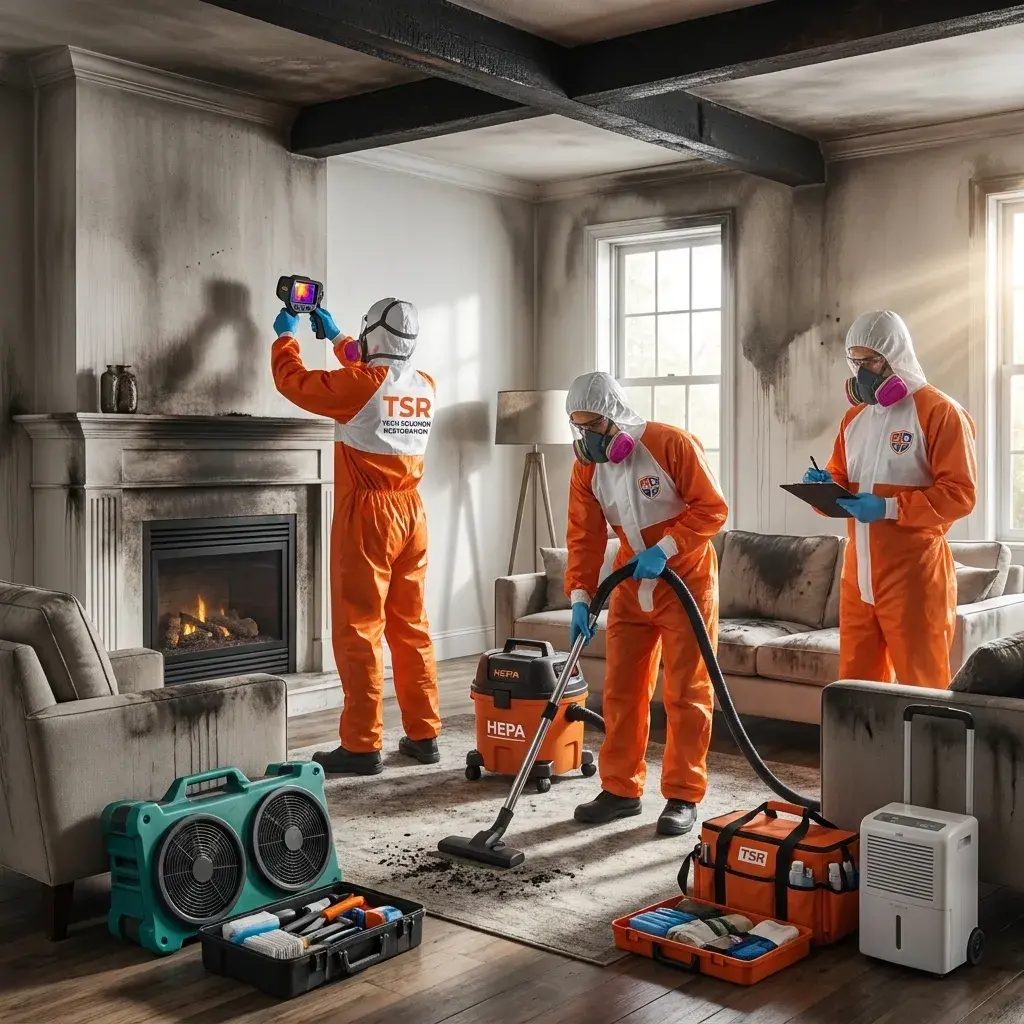
Fire and smoke damage cleanup & repair is an intricate, specialized process that property owners must address immediately following a structural fire. While the visible destruction of charred framing and burned personal belongings is devastating, the most pervasive, long-term destruction often stems from what you cannot see immediately. As flames tear through a structure, they consume a complex mix of natural wood, synthetic plastics, chemical-laden upholstery, and electrical components. This combustion creates a highly toxic, acidic plume of smoke that penetrates deep into wall cavities, settles inside HVAC ductwork, and drifts into unaffected rooms far away from the initial point of origin.
Failing to initiate an immediate, professional mitigation protocol allows this corrosive layer to silently compromise your building’s structural integrity and destroy high-end finishes day after day. Understanding the chemical nature of soot, the invisible risks it poses to your real estate investment, and how a professional recovery team handles restoration can save you from catastrophic secondary property loss and severe indoor air quality issues.
The Chemical Behavior of Soot and Smoke
Smoke does not simply vanish once the flames are extinguished. It leaves behind a complex, microscopic residue known as soot, which binds tightly to structural surfaces. Depending on the materials consumed during the fire, the soot left behind generally falls into a few distinct, destructive categories:
The Destructive Varieties of Smoke Residue
- Dry Soot: Formed by fast-burning wood or paper fires, this powdery, ash-like residue is highly mobile and easily drifts behind drywall, into light fixtures, and inside attic spaces.
- Wet Soot: Created by slow-smoldering, low-oxygen fires fueled by synthetic plastics, rubber, and foam padding. It leaves a thick, sticky, oil-like film that clings aggressively to walls and is exceptionally difficult to remove without specialized degreasers.
- Protein Residue: An invisible, highly pungent varnish left behind by kitchen grease or food fires. It does not cause obvious dark stains but permanently discolors premium kitchen cabinetry, warps stone countertops, and emits a powerful, rancid odor that worsens with humidity.
Because soot particles are highly acidic, they begin a rapid, chemical reaction with every surface they touch. Within hours, this acidic film can permanently yellow fine plastics, pit metals, and stain porous surfaces. Within days, it cause irreversible etching, corrosion, and structural staining to metal plumbing fixtures, custom appliances, and delicate natural stone finishes.
The Hidden Dangers Facing Local Properties
Leaving smoke residue unaddressed can lead to severe, cascading issues throughout your residential or commercial space. Soot continuously migrates through hidden pathways, causing deep structural decay and posing serious risks to occupants.
Hidden HVAC and Ductwork Contamination
Your property’s heating, ventilation, and air conditioning (HVAC) system naturally draws in air from across the building. During a fire, the immense pressure forces dense smoke into the return vents, coating the interior of your air ducts with a thick layer of toxic ash. If the system is turned on before a thorough cleaning is performed, it will continuously recirculate fine soot particles into every room, contaminating clean areas and ruining indoor air quality.
Severe, Molecular Odor Issues
The pungent smell associated with a recent fire is not just an inconvenience—it is a sign that volatile organic compounds (VOCs) and toxic gasses are actively off-gassing from saturated materials. Smoke odor molecules break down and lodge themselves deep inside the microscopic pores of wood framing, insulation, and drywall. Trying to mask these odors with household air fresheners or ozone machines without proper structural cleaning is entirely ineffective, as the odor will inevitably return whenever indoor humidity levels rise.
The Professional Process for Fire and Smoke Damage Cleanup & Repair
Successfully restoring a home or business from smoke contamination requires a highly scientific, phased approach executed by certified professionals who possess the diagnostic tools and industrial-grade equipment necessary to return your space to a pre-loss state.
Step 1: Structural Stabilization and Air Quality Control
Before detailed cleaning can begin, technicians must secure the environment and establish safe air levels. Specialists install heavy-duty plastic containment barriers to separate impacted areas from clean zones. They then deploy industrial HEPA air scrubbers and negative air pressure machines to trap airborne soot particles and begin purifying the breathing air.
Step 2: Precision Soot Scraping and Chemical Neutralization
Technicians utilize highly specialized, dry-chemical sponges to lift dry soot safely from walls and ceilings without smearing the carbon deeper into the paint. For sticky, synthetic wet soot, targeted, industrial-grade alkaline degreasers are applied to break down the acidic film on hard surfaces, preventing permanent etching and corrosion to metals, countertops, and appliances.
Step 3: Advanced Thermal Fogging and Hydroxyl Generation
To eliminate deep-seated smoke odors, professionals utilize advanced molecular neutralization equipment. Thermal foggers replicate the exact behavior of the fire, opening up the microscopic pores of structural wood and drywall to deliver a specialized deodorizing agent that completely breaks down the odor molecules. Hydroxyl generators are also deployed to safely eliminate odors and neutralize volatile organic compounds (VOCs) from the air over several days.
Step 4: Full Structural Reconstruction and Rebuilding
Once the property is certified clean, sanitized, and completely odor-free, the restoration transitions to the final phase. Licensed craftsmen take over to handle framing repairs, replace compromised drywall, repaint surfaces with specialized smoke-sealing primers, and reinstall fine carpentry or flooring, leaving your space looking entirely pristine.
Navigating Local Property Restoration Services
When managing a fire crisis, partnering with a responsive, highly specialized team located directly within your immediate geographic area provides an immense operational advantage. Choosing an established provider for fire and smoke damage cleanup & repair means your technicians can respond instantly to stop acidic corrosion before it becomes permanent.
A local team that maintains a focused neighborhood footprint understands the specific architectural styles, structural variations, and building regulations of our community. They are fully equipped to handle everything from minor kitchen smoke issues to comprehensive structural drying, sewage cleanup, and detailed mold cleaning with total accuracy. When you search for a trusted property mitigation specialist near me, look for a dedicated partner that offers clear communication, handles direct insurance coordination, and treats your property with genuine empathy.
Frequently Asked Questions
Can I clean up smoke damage myself using household cleaning products?
No, attempting to clean up soot using standard household cleaners or water frequently causes the highly acidic carbon particles to smear, driving the dark stains deeper into the paint or porous drywall and making them permanent. Furthermore, handling synthetic or oily wet soot requires specialized personal protective equipment (PPE) and target chemical degreasers to break down the bond safely without creating toxic fumes or spreading the damage.
How do professionals remove the smell of smoke from a building?
Professionals use a multi-step molecular process rather than just masking the scent. First, they physically remove all soot-laden materials and wash down hard surfaces with industrial neutralizing solutions. Next, they deploy advanced equipment like thermal foggers and hydroxyl generators. These machines penetrate deep into porous building components, breaking down the chemical bonds of the trapped odor molecules to destroy the smell permanently.
How long does the fire and smoke restoration process typically take?
The timeline varies widely based on the severity of the fire and the volume of smoke produced. A minor kitchen soot cleanup may take anywhere from 3 to 7 days, whereas a major structural fire involving heavy water damage from fire hoses, extensive soot migration, and structural reconstruction can take several weeks to fully complete. A professional team will provide a detailed project roadmap after performing an initial on-site evaluation.
Will smoke damage inside my walls affect my health?
Yes, unaddressed smoke residue can pose ongoing risks to your indoor environment. Soot contains microscopic particles composed of carbon, chemicals, and volatile toxins that can easily become airborne. Inhaling these fine particles can aggravate respiratory conditions, cause eye and throat irritation, and severely degrade overall indoor air quality over time, which is why complete professional decontamination is vital.
Does property insurance cover smoke damage cleanup and structural repair?
In almost all cases, standard property insurance policies cover fire and smoke damage restoration, provided the fire was accidental. A professional restoration provider works hand-in-hand with your insurance adjuster, providing comprehensive digital photo logs, moisture readings from fire suppression efforts, and detailed line-item estimates using industry-standard software to help streamline your claim.
Partner With Your Local Restoration Experts
If your property has experienced a fire or has been impacted by migrating smoke residue, do not wait for the acidic soot to cause permanent damage. TS Restoration is standing by 24/7/365 to deliver the rapid technical expertise and compassionate care you need to restore your home or business.
- Company Name: TS Restoration
- Physical Address: 8909 W Olympic Blvd #208, Beverly Hills, CA 90211, United States
- Emergency Assistance: Contact our office directly to speak with an on-call specialist immediately.
Get your property back to pristine condition today. You can easily view our office location, map out rapid driving directions, or read verified testimonials from your neighbors directly on our Google Map to see how our friendly local team protects homes and businesses across the community.