
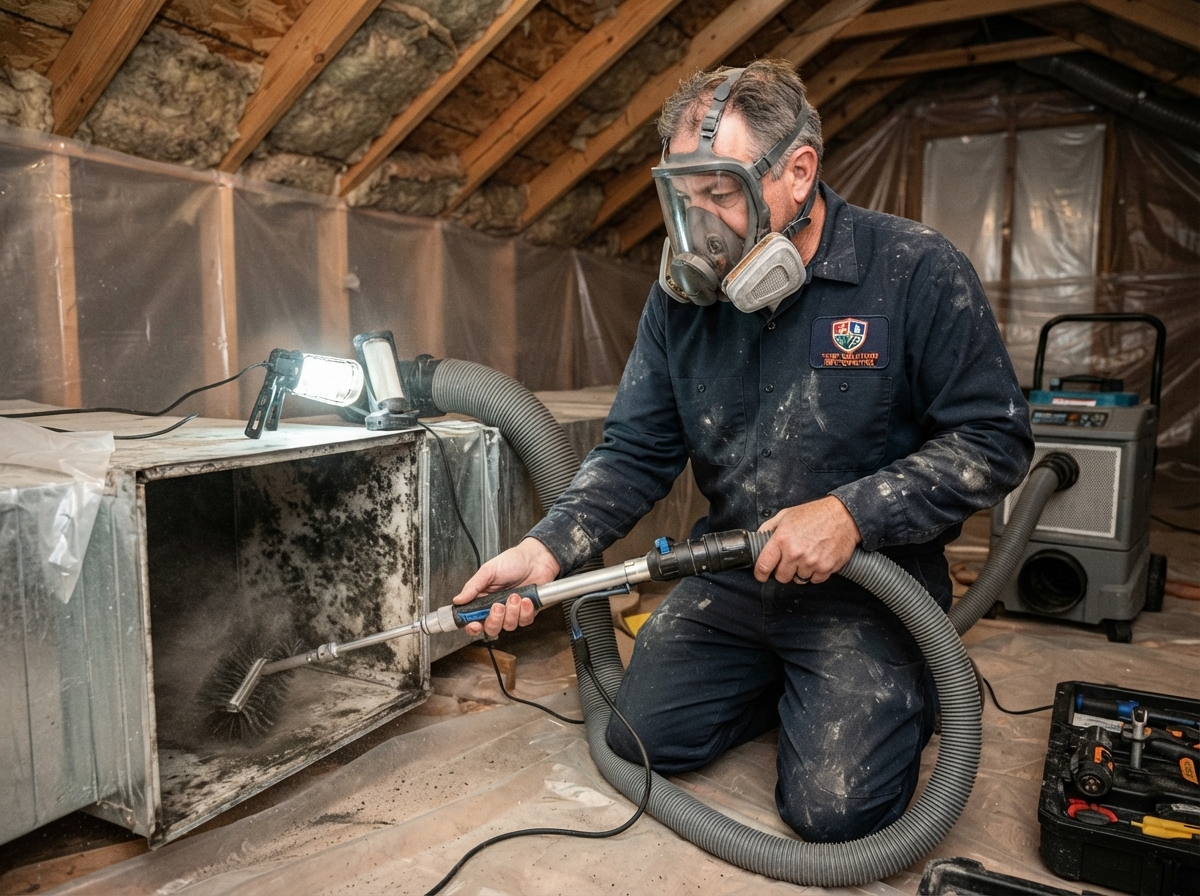
Most mold problems stay where they start until someone deals with them. Mold inside an HVAC system doesn’t work that way — every time the system runs, it has the potential to carry spores into every room it serves. HVAC mold removal is one of the few situations where a fairly contained issue can end up affecting an entire Toluca Lake home’s air quality at once.
Why HVAC Mold Is Different From Mold Anywhere Else
A mold patch on a bathroom ceiling stays roughly where it is until it’s addressed. Mold growing inside ductwork, on a cooling coil, or in a drain pan gets picked up by airflow and distributed throughout the home every time the system cycles on. That’s why a musty smell that seems to come from “everywhere” rather than one specific room is often a sign worth checking the HVAC system itself, not just individual rooms.
How Mold Gets Into an HVAC System
Air conditioning systems naturally produce condensation as part of how they cool air, and if drainage isn’t working properly or a drain pan isn’t cleaned periodically, that moisture becomes a steady mold source sitting right inside the system’s airflow path. Ductwork itself can also accumulate dust and moisture over time, especially in sections that run through less-conditioned spaces like attics, creating conditions mold can take hold in.
Signs It Might Be in Your Ductwork
- A musty smell that’s strongest right when the HVAC system turns on
- Visible dark spots around vent covers or return air grilles
- Allergy-like symptoms that seem to get worse indoors and improve when you’re away from the home
- Visible mold near the outdoor condensing unit or indoor air handler
We serve Toluca Lake, Studio City, and Universal City for mold inspection tied to HVAC systems and general home mold remediation.
What HVAC Mold Removal Involves
- Inspecting the full system, including ductwork, the drain pan, and coil areas, not just the visible vents in each room.
- Identifying the moisture source within the system, whether that’s drainage, condensation buildup, or a ventilation issue.
- Cleaning or, when needed, replacing affected components that can’t be safely cleaned.
- Coordinating with an HVAC technician when a mechanical repair — like fixing drainage — is needed to prevent the problem from returning.
The EPA’s guidance on air duct cleaning is a useful starting point for understanding when HVAC-related mold concerns are worth professional attention.
Frequently Asked Questions
How do I know if a musty smell is coming from my HVAC system?
If the smell is strongest right when the system turns on, or seems to come from multiple rooms rather than one specific area, it’s worth having the system itself inspected.
Can I clean HVAC mold myself?
Ductwork and internal components are difficult to access and clean safely without proper equipment, and improper cleaning can actually spread spores further through the system.
Does HVAC mold always mean I need new ductwork?
Not necessarily — some situations can be resolved with thorough cleaning and fixing the underlying moisture source, while more extensive contamination may require replacing certain sections.
Will running my HVAC system spread mold to rooms that seem fine now?
If mold is present in the ductwork, yes, continued use can distribute spores throughout the home, which is why addressing it promptly matters.
Get Help Now
If your Toluca Lake home has a musty smell that seems to follow your HVAC system, our mold remediation team can find out whether your ductwork is the source.
📞 Call Tech Solution Restoration: 424-404-1450