
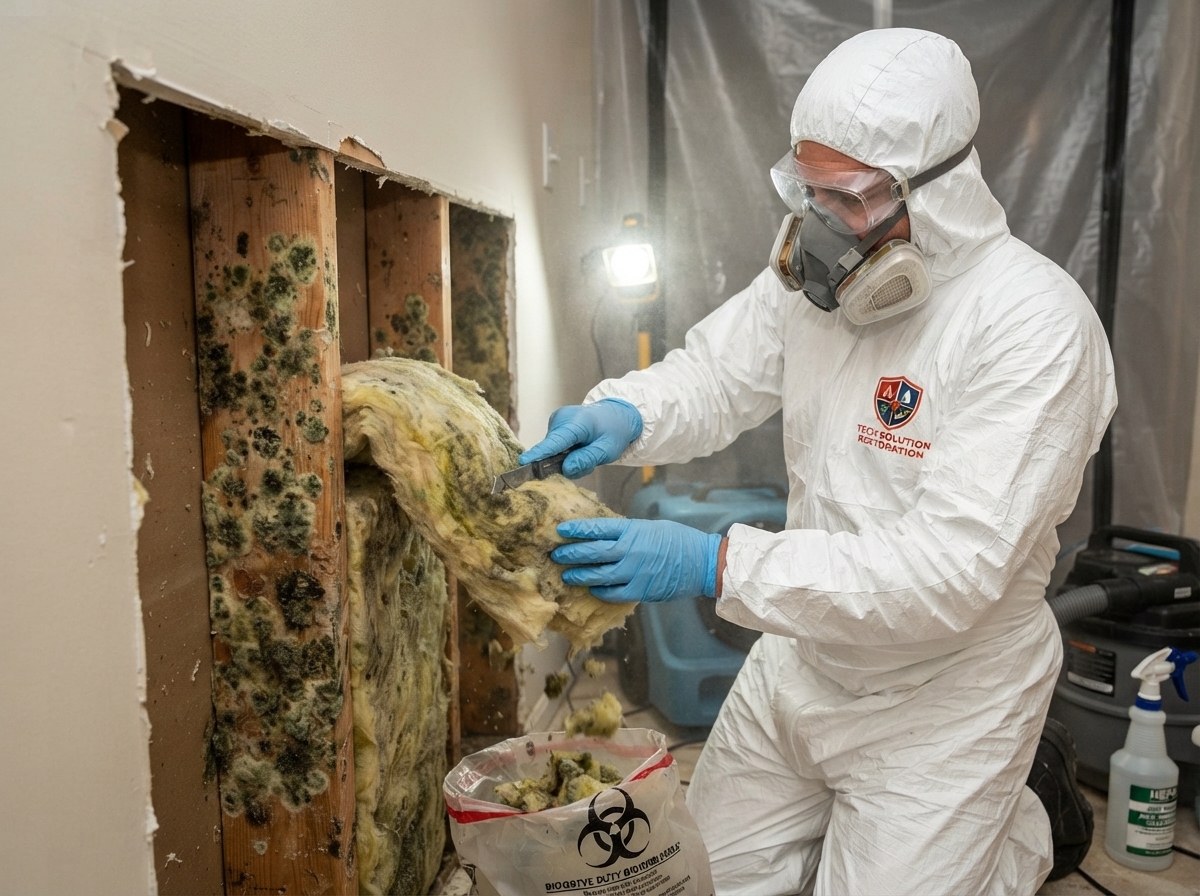
If there’s one room I get called about more than any other for mold, it’s the bathroom. Bathroom mold removal requests from West LA homeowners almost always start the same way — grout that keeps coming back dark no matter how many times it’s scrubbed, and almost always end with the same root cause: ventilation that isn’t doing its job.
Why Bathrooms Are the Most Common Mold Location
Bathrooms generate more consistent moisture than almost any other room in a home — showers, baths, sinks, all producing humidity multiple times a day. That alone isn’t a problem if the moisture has somewhere to go. The issue comes when ventilation isn’t strong enough, isn’t used consistently, or isn’t vented properly to the outside, leaving humidity to linger on tile, grout, drywall, and ceiling surfaces long after the shower’s been turned off.
The Ventilation Piece Everyone Skips
I can’t tell you how many times I’ve seen a homeowner regrout a bathroom, only to have the same dark staining reappear within a few months. The grout was never really the problem — it was a symptom of a fan that’s too weak for the room’s size, isn’t run long enough after showers, or in some older West LA homes, isn’t vented outside the house at all, just pushing humid air into the attic space instead. Any lasting fix has to deal with that underlying ventilation issue.
Mold Isn’t Always Just on the Tile
Visible mold on grout or caulking is usually the tip of the problem. Behind tile surrounds, mold can develop on the substrate itself, especially around areas where sealant has failed and allowed moisture behind the waterproofing layer. This is part of why persistent bathroom mold — the kind that keeps returning despite regular cleaning — often needs a closer look than surface-level scrubbing can provide.
We provide bathroom mold removal and remediation throughout West Los Angeles, Sawtelle, and nearby Westside neighborhoods.
What Proper Bathroom Mold Removal Involves
- Assessing ventilation — fan strength, venting path, and whether it’s being used effectively — as part of any bathroom mold inspection.
- Checking behind surfaces where sealant has failed, not just cleaning what’s visible on top.
- Safe removal of affected grout, caulking, or substrate material that can’t simply be cleaned.
- Addressing the ventilation issue, whether that’s a fan upgrade recommendation or correcting how it’s vented, so the mold doesn’t return.
The EPA’s brief guide to mold and moisture covers ventilation basics that apply directly to bathroom mold prevention.
Frequently Asked Questions
Why does bathroom mold keep coming back after I clean it?
In most cases, the underlying moisture or ventilation issue was never addressed, so cleaning the visible mold without fixing the cause just delays its return.
How long should I run my bathroom fan after a shower?
Generally at least 20 to 30 minutes after showering, though it depends on the room’s size and how humid it gets during use — a professional assessment can tell you if your specific fan is adequately sized.
Is mold behind bathroom tile common?
It’s more common than people expect, particularly in older installations or anywhere caulking and sealant have started to fail, allowing moisture behind the surface.
Can I fix bathroom mold myself with household cleaners?
Surface cleaning can address visible mold temporarily, but without correcting ventilation or checking for moisture behind surfaces, it’s likely to return.
Get Help Now
If bathroom mold keeps coming back no matter how much you clean it, our mold remediation team can find out what’s actually causing it.
📞 Call Tech Solution Restoration: 424-404-1450, available 24/7