
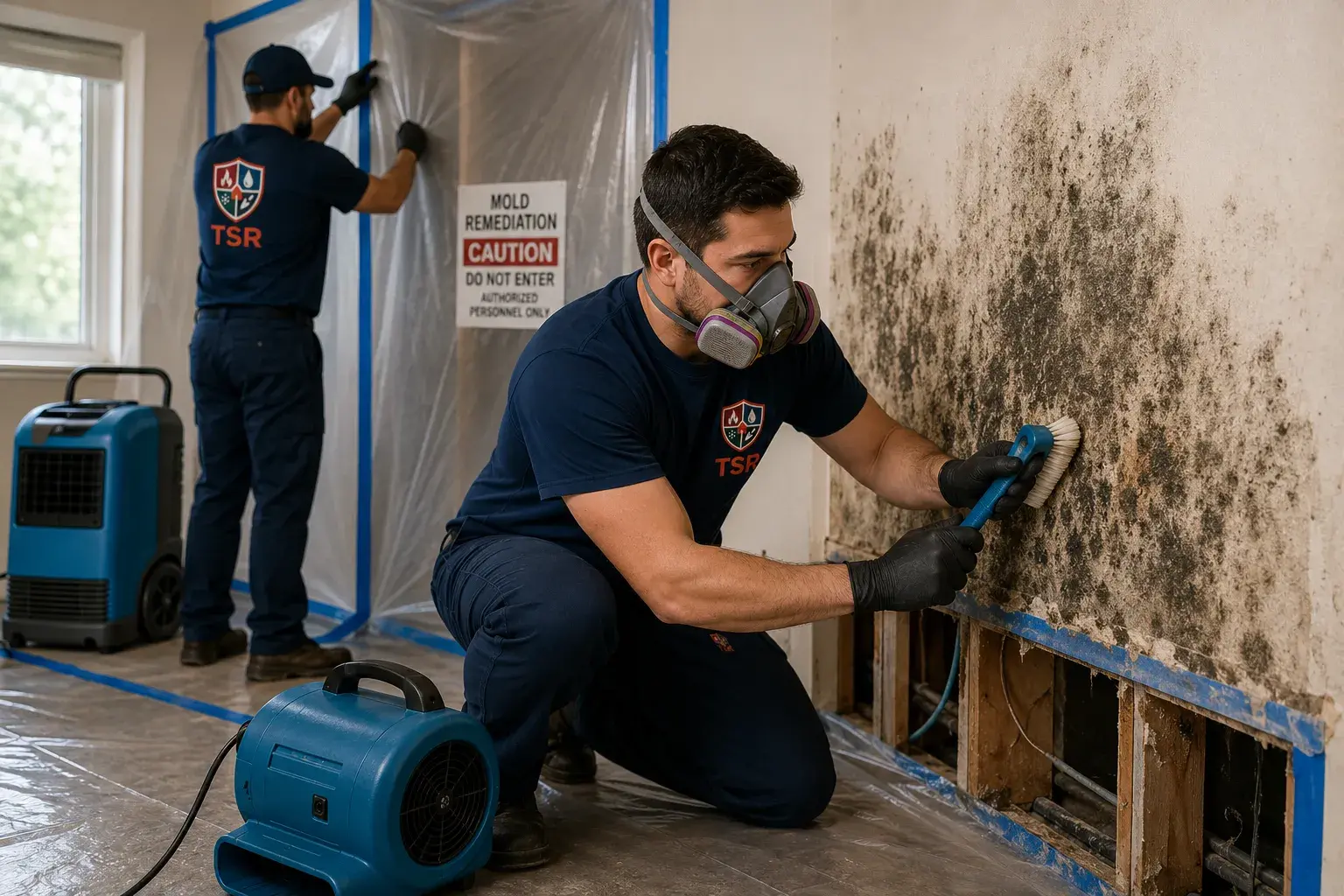
Mold remediation in Beverly Hills represents a highly complex, scientifically driven process that property owners should never underestimate. When an unexpected water anomaly strikes—such as a slow, pinhole slab leak, a leaking window seal after heavy winter rains, or an overlooked bathroom exhaust fan malfunction—the resulting humidity creates a perfect breeding ground for fungal spores. Because modern properties are heavily insulated and sealed tightly for energy efficiency, trapped moisture has nowhere to escape. It rapidly migrates into the structural core of your building, settling quietly into hidden cavities.
Many well-meaning homeowners discover a localized patch of discoloration and immediately attempt to handle the problem themselves using standard household cleaning supplies. However, surface-level washing completely misses the actual structural crisis taking place out of sight. A superficial, DIY cleaning approach doesn’t address the sprawling fungal networks thriving deep within your building components. Understanding the biological nature of indoor fungal growth, why standard retail cleansers fall short, and when to bring in a certified specialist can protect your building from severe structural decay and permanent asset devaluation.
The Illusion of the Quick Fix: Why Bleach and Retail Sprays Fail
The most common mistake property owners make when confronting an indoor moisture issue is reaching for a bottle of standard household bleach or a retail mildew remover. While these products may temporarily turn the visible surface white, they are fundamentally incapable of achieving true decontamination on porous materials like drywall, wood framing, and ceiling tiles.
The Science of Porous Saturation
Fungal organisms do not simply sit flat on top of a surface; they grow root-like structures called hyphae that burrow deep into the microscopic pores of wood and paper. Standard household bleach is chemically composed of roughly 90% water and a small percentage of chlorine. When sprayed onto a porous wall, the chlorine molecule is too large to penetrate the dense material, so it remains on the outside, merely stripping away the top surface pigment.
Meanwhile, the water component of the bleach sinks straight into the deep drywall fibers. This inadvertently provides the hidden hyphae roots with a massive injection of moisture. Within a few days of a DIY bleach application, the hidden colony utilizes this water to surge back with greater intensity, spreading even further throughout the wall cavity.
The Trap of Superficial Cleaning
Attempting to scrub away a fungal colony without professional containment zones frequently worsens the overall contamination. Agitating an active patch without proper air controls causes the organism to release millions of microscopic, airborne spores into the surrounding environment. These spores drift into your ventilation system, settle onto clean fabrics, and create secondary outbreaks in entirely unaffected rooms across your property.
What Lies Behind the Drywall? Tracking Hidden Spores
A small patch of discoloration on the face of a wall is usually just the tip of the iceberg. The primary colony almost always resides on the unpainted, raw paper backing of the drywall inside the dark, stagnant wall cavity.
Hidden Structural Microclimates
The interior of a wall framing system lacks sunlight, experiences zero air movement, and remains naturally cool. If an active plumbing leak or structural condensation keeps the interior studs damp, the fungal network will consume the organic cellulose within the drywall and wood components from the inside out. By the time the visible front face of your wall shows signs of soft spots, bubbling paint, or dark staining, the internal insulation and wood studs are frequently heavily contaminated, necessitating extensive material removal and structural carpentry rather than a basic wipe-down.
Ongoing Threat to Indoor Environmental Integrity
When a large fungal cluster remains unaddressed behind your walls, it continuously emits microbial volatile organic compounds (mVOCs) into the air. These gasses are responsible for the distinct, heavy, earthy odor commonly associated with hidden property leaks. As these compounds and microscopic spores leak out past baseboards and electrical outlets, they severely compromise overall indoor air quality, making the indoor environment uncomfortable and unsafe for prolonged occupancy.
The Professional Protocol for Mold Remediation in Beverly Hills
Safely resolving a deep-seated moisture and spore crisis requires a systematic, multi-phased approach executed by certified professionals who follow rigorous environmental guidelines and utilize heavy-duty air purification equipment.
Step 1: Digital Non-Destructive Structural Inquiries
True mitigation cannot begin until the moisture source fueling the ecosystem is completely located and shut down. Technicians utilize non-invasive digital moisture meters, pinless structural scanners, and thermal imaging infrared cameras to map the exact boundaries of the hidden water intrusion. This diagnostic tracking allows specialists to identify the precise wet zones behind your walls without tearing down structural components prematurely.
Step 2: Critical Engineered Containment and Air Management
Before a single piece of contaminated material is touched, technicians isolate the affected space to protect the rest of your property. Heavy-duty plastic barriers are installed across all doors, windows, and vents. Specialized negative air machines are then deployed to vent air outside, establishing continuous negative pressure. This ensures that any spores disturbed during structural demolition are pulled into filtration systems rather than escaping into clean rooms.
Step 3: Industrial HEPA Air Scrubbing
High-capacity air scrubbers equipped with certified HEPA filters are kept running continuously throughout the workspace. These machines cycle the indoor air multiple times per hour, trapping airborne particles down to 0.3 microns with extreme efficiency to return the room’s air profile back to a safe, pre-loss standard.
Step 4: Controlled Removal and Deep Mechanical Sanitization
Highly saturated, structurally degraded porous components (such as affected insulation or crumbling drywall) are carefully cut away, misted with an anti-microbial solution to bind loose particles, and packed into sealed containment bags for legal disposal. The remaining solid wood studs, structural framing, and concrete elements are then deeply cleaned using specialized HEPA vacuums and wire-brushed with EPA-approved, commercial-grade antimicrobials that eliminate the deep root systems at a molecular level.
Securing Specialized Local Property Mitigation Care
When facing a hidden environmental challenge inside your home or business, choosing a responsive, highly specialized team located directly within your immediate community offers an incredible strategic benefit. Partnering with a dedicated specialist for mold remediation in Beverly Hills means your response team can arrive promptly, evaluate your property with advanced equipment, and initiate containment protocols before the spores migrate into your main HVAC system.
A local restoration partner understands the unique layout of regional properties, premium interior finishes, and municipal building regulations across our neighborhood. They possess the training and specialized gear required to handle everything from intricate wall cavity decontamination and structural drying to detailed water damage restoration, fire damage cleanup, and emergency sewage cleanup with complete precision. When you look for a trusted structural mitigation provider near me, look for an accountable organization that prioritizes clear communication, provides detailed digital documentation, and works directly with your insurance provider to ensure a seamless recovery.
Frequently Asked Questions
Why does a hidden leak cause a musty smell even if I can’t see any damage?
The musty smell is caused by microbial volatile organic compounds (mVOCs), which are gasses released by a living fungal colony as it consumes organic building materials like wood or drywall paper. Because these gasses can easily pass through tiny gaps around electrical outlets, light switches, and baseboards, they enter your living space long before the physical water damage migrates through to the front face of the wall.
What is the difference between air testing and surface testing during an inspection?
Surface testing involves using a sterile swab or tape lift directly on a visible stain to determine the specific genus of the organism present. Air testing utilizes a calibrated vacuum pump to draw a specific volume of indoor air through a collection cassette. Air samples measure the exact concentration of spores floating in your breathing air, allowing technicians to detect hidden infestations behind walls and verify whether your overall indoor air quality has been compromised.
Can my property pass an inspection if you leave the frame studs in place?
Yes. Solid wood studs and structural framing components are semi-porous, meaning that while the organism can grow on the surface, it rarely penetrates deep into the heartwood of structural timber. If the wood remains structurally sound, professionals can treat it using advanced mechanical sanding, wire brushing, and deep applications of EPA-approved antimicrobials, allowing the framing to be safely preserved while passing all post-remediation verification testing.
How long do I have to wait to rebuild my walls after remediation is done?
Rebuilding should only begin after the workspace has passed a formal post-remediation verification (PRV) clearance test, which is typically conducted by an independent third-party environmental professional. This clearance ensures that all visible growth has been removed, the underlying structural materials are completely dry, and the indoor airborne spore counts are equal to or lower than natural outdoor baseline levels. Once cleared, fresh drywall can be hung immediately.
Will my property insurance cover a professional remediation project?
Property insurance coverage depends on what caused the moisture problem. If the fungal growth developed as a direct result of a sudden, accidental water emergency—such as a major pipe burst or a washing machine supply line rupture—the cleanup costs are typically covered under the water mitigation portion of your policy. If the moisture stemmed from long-term maintenance neglect, a slow roof leak ignored for months, or rising outdoor floodwaters, the claim may be limited or denied.
Take Back Control of Your Indoor Environment
If a persistent musty odor has taken over a room or you discover suspicious staining along your baseboards, do not ignore the warning signs. TS Restoration is standing by 24/7/365 to deliver the professional technical expertise, state-of-the-art diagnostic equipment, and compassionate service you need to protect your investment.
- Company Name: TS Restoration
- Physical Address: 8909 W Olympic Blvd #208, Beverly Hills, CA 90211, United States
- Emergency Property Care: Contact our office directly to speak with a certified specialist immediately.
Return your property back to pristine condition today. You can easily view our office location, map out rapid driving directions, or read verified testimonials from your neighbors directly on our Google Map to see how our friendly local team protects homes and businesses across the entire community.