
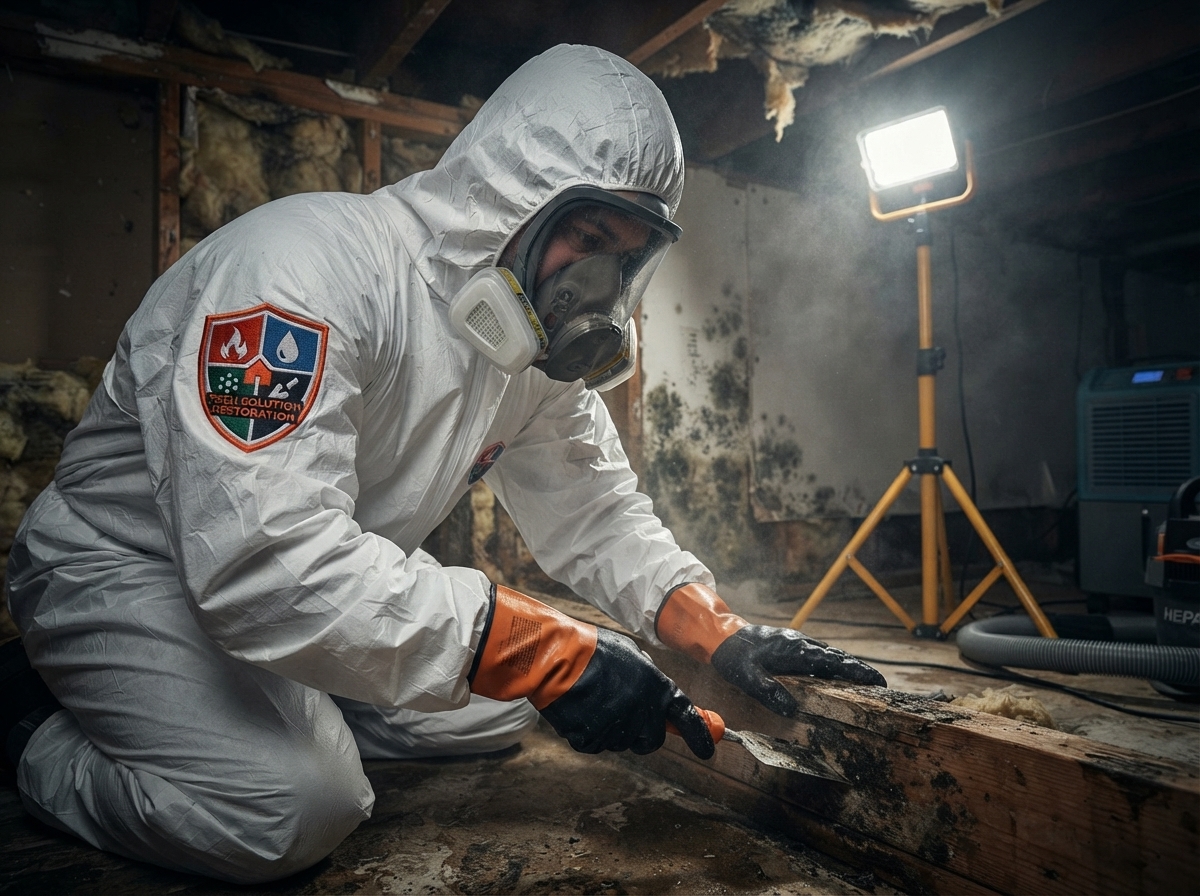
Beverly Hills is renowned for its luxury estates, detailed architectural finishes, and Mediterranean climate. However, Southern California’s coastal humidity, combined with modern airtight building construction, creates an ideal environment for hidden microbial growth. When an unnoticed plumbing leak, HVAC condensation overflow, or rainwater intrusion saturates building materials behind custom millwork or plaster, toxic fungal spores can germinate in as little as 24 to 48 hours.
Managing a indoor mold infestation requires far more than spraying surface-level household cleaners. Attempting to scrub active mold colonies without proper containment disperses millions of microscopic spores throughout your HVAC system and living areas. Partnering with certified specialists for comprehensive mold remediation ensures that fungal colonies are safely isolated, physically removed, and permanently prevented from returning.
The Hidden Danger: Why Household Cleaners Fail Against Deep Fungal Roots
Many property owners assume that applying bleach or over-the-counter biocides to moldy drywall or grout resolves the issue. In reality, these consumer products only address surface staining while leaving deep-seated fungal roots intact inside porous materials like drywall, plaster, and subflooring.
[ CONSUMER BLEACH TREATMENT ]                     [ PROFESSIONAL MOLD REMEDIATION ]
            │                                                      │
            ▼                                                      ▼
┌──────────────────────────────┐                   ┌──────────────────────────────┐
│ Bleach surface runoff        │                   │ Negative Air Containment     │
│ Water stays inside drywall   │                   │ HEPA Air Scrubbing           │
│ Roots continue feeding       │                   │ Physical Root Extraction     │
└───────────┬──────────────────┘                   └───────────┬──────────────────┘
            │                                                      │
            ▼                                                      ▼
[ RECURRING TOXIC OUTBREAK ]                       [ CERTIFIED AIR CLEARANCE ]
1. High Material Porosity
Building materials such as drywall, wood studs, and carpet padding act like sponges. Mold hyphae (root structures) penetrate deep into these porous substrates. Surface sprays fail to reach these deeper layers, leaving the colony alive and ready to re-emerge as soon as ambient humidity rises.
2. Spore Dispersion Risks
Disturbing dry mold colonies without establishing negative air pressure releases vast quantities of airborne spores into your ventilation network. These spores settle in unaffected rooms, leading to widespread secondary contamination across your property.
Signs You Need Immediate Mold Removal in Beverly Hills Properties
Because mold thrives in dark, unventilated cavities, infestations often go undetected until health symptoms arise or structural damage becomes obvious. Watch for these key warning indicators:
- Persistent Musty Odors: A earthy, stale smell that remains despite deep cleaning or running air purifiers often points to active growth inside wall cavities or crawl spaces.
- Unexplained Respiratory Symptoms: Family members experiencing persistent coughing, sinus congestion, eye irritation, or heightened asthma attacks when indoors.
- Visible Paint Peeling or Wall Bubbling: Discolored patches, warping wallpaper, or bubbling paint on walls often indicate moisture accumulation and hidden mold growth behind drywall.
- HVAC Register Discoloration: Dark spots forming around supply vents, return grilles, or ductwork liners suggest airborne spores are circulating through your heating and cooling system.
The 5-Stage Certified Mold Remediation Workflow
Effective mold remediation follows strict engineering controls established by the Institute of Inspection Cleaning and Restoration Certification (IICRC). This scientific approach guarantees complete eradication while preserving your home’s air quality.
┌──────────────────────────────────────────────────────────┐
│ STAGE 1: Thermal Moisture Mapping & Air Quality Sampling │
└────────────────────────────┬─────────────────────────────┘
                             │
                             ▼
┌──────────────────────────────────────────────────────────┐
│ STAGE 2: Critical Containment & Negative Air Pressure    │
└────────────────────────────┬─────────────────────────────┘
                             │
                             ▼
┌──────────────────────────────────────────────────────────┐
│ STAGE 3: True HEPA Air Filtration & Scrubbing            │
└────────────────────────────┬─────────────────────────────┘
                             │
                             ▼
┌──────────────────────────────────────────────────────────┐
│ STAGE 4: Physical Removal & Antimicrobial Treatment      │
└────────────────────────────┬─────────────────────────────┘
                             │
                             ▼
┌──────────────────────────────────────────────────────────┐
│ STAGE 5: Post-Remediation Verification & Air Clearance   │
└────────────────────────────┘
Stage 1: Assessment and Moisture Mapping
Technicians perform non-invasive moisture inspections using FLIR thermal cameras and pinless moisture meters to map out trapped water sources. Air and surface samples may be collected to identify specific fungal species and spore concentrations.
Stage 2: Containment and Negative Air Pressure
Before disturbing any impacted material, heavy-duty poly sheeting containment zones are erected. Industrial air scrubbers equipped with HEPA filtration create continuous negative air pressure, preventing airborne spores from escaping into unaffected living areas during cleanup.
Stage 3: High-Efficiency Particulate Air (HEPA) Scrubbing
Industrial HEPA air filtration units continuously process the air within the containment zone, capturing airborne particles down to 0.3 microns with 99.97% efficiency to cleanse ambient indoor air.
Stage 4: Precision Material Removal and Sanitization
Unsalvageable porous materials (like infected drywall or insulation) are carefully bagged, sealed, and removed. Non-porous structural framing members are sanded, HEPA-vacuumed, and treated with EPA-registered antimicrobial agents to kill residual roots.
Stage 5: Post-Remediation Verification and Clearance Testing
After detailed cleaning and surface sealants are applied, independent air clearance testing verifies that airborne spore counts have returned to normal, healthy outdoor baseline levels before containment is taken down.
Real-World Scenarios: Addressing Fungal Growth in Local Estates
Scenario A: Musty Closet Behind Master Suite Bath
A slow, hidden plumbing leak in an adjacent walk-in shower caused water to seep into the back wall of a master bedroom closet. The homeowner noticed a musty odor clinging to clothing. Technicians set up localized containment, safely removed contaminated drywall, treated structural studs, and installed a dedicated dehumidification system to protect valuable garments.
Scenario B: Attic Condensation Impacting Overhead Ceilings
Clogged AC condensate lines caused standing water to accumulate in an attic crawlspace, causing widespread mold growth across ceiling joists and insulation. A specialized mold remediation protocol was deployed, utilizing negative air machines, HEPA vacuuming, and thermal drying to restore structural framing without requiring full ceiling teardowns.
Frequently Asked Questions (Q&A)
How long does a typical professional mold remediation process take?
For most residential properties, the complete process takes between 3 to 5 days, depending on the size of the containment zone, the depth of material saturation, and the time required for independent air clearance testing.
Is it safe to stay inside my home during the remediation process?
If the contamination is isolated to a specific room (such as an individual bathroom or closet), containment barriers and negative air machines allow you to safely remain in other parts of the residence. However, for widespread infestations or HVAC involvement, temporary relocation during active cleanup may be recommended.
Can mold return after professional treatment is completed?
Mold spores exist naturally everywhere in the environment. Professional remediation eliminates existing active colonies and restores airborne spore counts to safe levels. However, to prevent new mold from forming, the underlying moisture issue—such as a plumbing leak or high indoor humidity—must be permanently repaired.
Will insurance cover the cost of mold containment and removal?
Coverage depends on your specific policy and the original cause of the moisture. If the mold developed directly as a result of a sudden, covered water incident (like a burst pipe), remediation costs are frequently covered. Detailed moisture logs, thermal imaging reports, and itemized billing help simplify the insurance claims process.
Why Choose Tech Solution Restoration?
When hidden moisture or fungal growth compromises your indoor air quality, you need a trusted local team that delivers rapid, scientific containment and lasting mitigation. Tech Solution Restoration provides comprehensive, full-service environmental care tailored to the high standards of Beverly Hills property owners.
- 24/7 Emergency Dispatch: Our certified team responds rapidly to assess property damage and stop microbial spread before it expands.
- Advanced Containment & HEPA Technology: We utilize state-of-the-art negative air scrubbers, thermal imaging, and EPA-registered treatments for absolute safety.
- Comprehensive Turnkey Solutions: From initial moisture detection and containment to structural drying, antimicrobial sealing, and complete rebuilding, we manage every phase.
- Seamless Insurance Support: We work directly with major insurance carriers, providing thorough documentation and thermal monitoring reports to support your claim.
Contact Our Beverly Hills Specialists
Protect your property, health, and indoor air quality from hidden fungal threats. Contact our local team today for immediate 24/7 expert assistance:
- Brand Name: Tech Solution Restoration
- Address: 8909 W Olympic Blvd Unit 208, Beverly Hills, CA 90211
- Phone Number: (310) 857-8767
- 24/7 Emergency Line: Call us today to schedule an immediate on-site inspection and restoration consultation!
READ MORE:
Attic and Crawl Space Mold Remediation in Beverly Hills: Protecting Unseen Property Cavities