
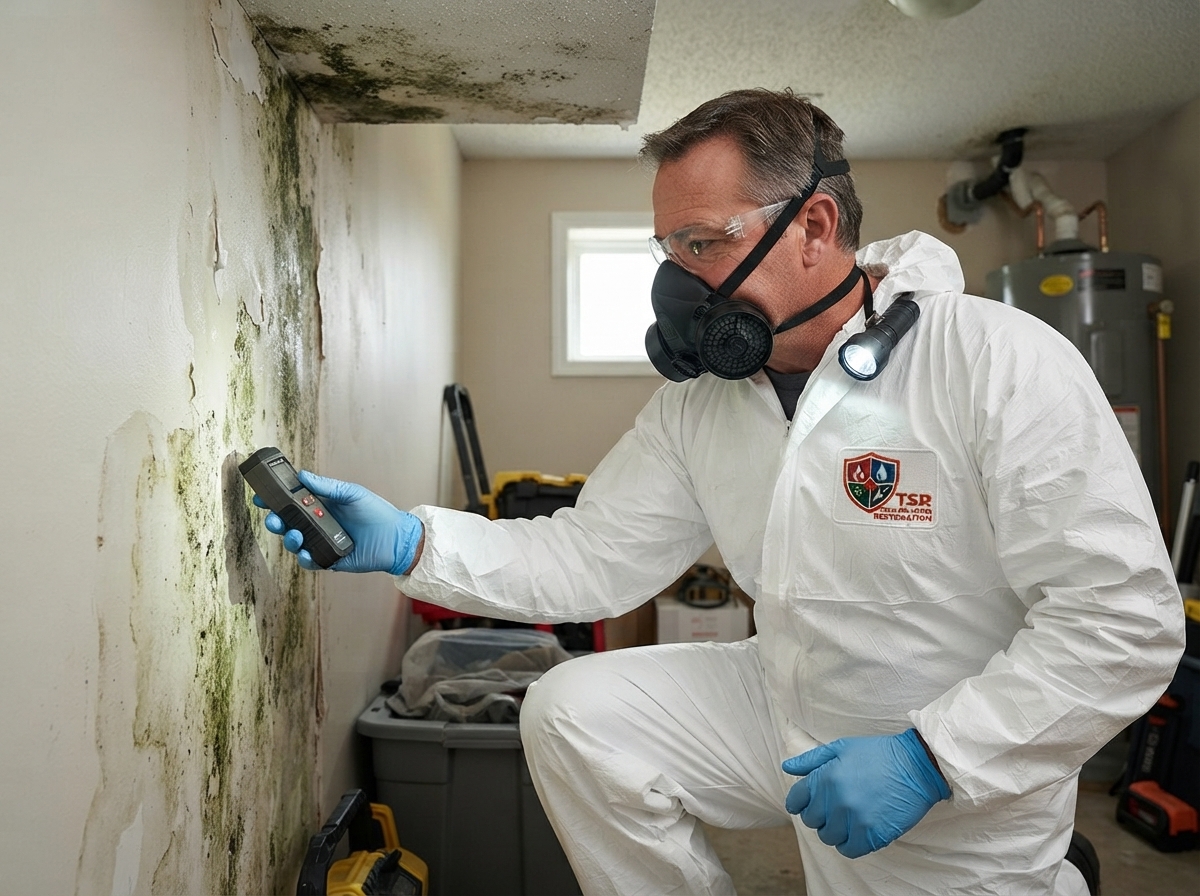
In luxury properties across Beverly Hills, attics and subterranean crawl spaces house essential infrastructure—including climate control ductwork, structural floor joists, and main utility lines. Because these unconditioned service areas are rarely visited by homeowners, they represent prime targets for hidden environmental threats.
When an unaddressed roof tile leak, a leaking HVAC condensate line, or ground moisture saturation introduces water into these dark, confined zones, mold growth can spread rapidly across insulation and structural timbers. Addressing these hidden fungal outbreaks through specialized mold remediation is vital to protecting both the structural stability of your estate and the overall indoor air quality of your living spaces.
Why Attics and Crawl Spaces are Vulnerable to Microbial Growth
Attics and crawl spaces possess unique environmental characteristics that make them particularly susceptible to sudden, widespread fungal colonization.
                      [ UNSEEN STRUCTURE RISKS ]
                                   │
         ┌─────────────────────────┴─────────────────────────┐
         ▼                                                   ▼
[ ATTIC VULNERABILITIES ]                           [ CRAWL SPACE VULNERABILITIES ]
• Roof tile & flashing leaks                        • Hydrostatic ground moisture rising
• Duct condensation & insulation sweat              • Unsealed dirt floors & high humidity
• Clogged HVAC condensate lines                     • Sub-level plumbing line micro-leaks
         │                                                   │
         └─────────────────────────┬─────────────────────────┘
                                   ▼
                   [ THE STACK EFFECT (AIR DRAW) ]
                                   │
                                   ▼
         [ SPORES & CONTAMINANTS DRAWN INTO MAIN LIVING AREAS ]
1. The “Stack Effect” (Air Migration)
Homes act like thermal chimneys. Warm air naturally rises and escapes through the attic, creating negative pressure at lower levels that draws air upward from the crawl space through floor penetrations, piping gaps, and electrical conduits. If your crawl space or attic harbors active fungal colonies, this natural airflow continually draws spores, dust mites, and damp air directly into your main living quarters.
2. HVAC System Proximity
Central air handling units and main distribution ducts are frequently installed in attic spaces or subterranean vaults. When fungal growth develops near these air handlers, microscopic spores can easily pass through minor duct seam leaks, distributing contaminated air into every bedroom and living space on your property.
Recognizing the Signs of Hidden Sub-Level and Overhead Mold
Because these structural spaces are out of sight, property owners must rely on secondary indicators to detect developing fungal problems before major structural damage occurs:
- Persistent Musty Odors Near Vents: Musty, earthy smells that intensify whenever your central heating or air conditioning turns on.
- Buckling or Sagging Hardwood Floors: Excess humidity in a crawl space saturates subflooring from below, causing solid wood planks on the first floor to cup, warp, or squeak excessively.
- Dark Staining on Attic Sheathing: Discoloration along roof trusses, plywood sheathing, or around attic access hatches.
- Unexplained Spikes in Utility Bills: Mold-covered insulation loses its thermal resistance (R-value), forcing your HVAC system to work significantly harder to regulate indoor temperatures.
The Certified Sub-Level & Overhead Remediation Process
Eliminating microbial growth in confined, structural spaces requires specialized personal protective equipment (PPE), heavy-duty containment engineering, and precision equipment setup.
┌──────────────────────────────────────────────────────────┐
│ PHASE 1: Thermal Inspection & Moisture Source Identification│
└────────────────────────────┬─────────────────────────────┘
                             │
                             ▼
┌──────────────────────────────────────────────────────────┐
│ PHASE 2: Isolation Containment & HEPA Air Scrubbing      │
└────────────────────────────┬─────────────────────────────┘
                             │
                             ▼
┌──────────────────────────────────────────────────────────┐
│ PHASE 3: Precision Material Removal & Abrasive Media Cleaning│
└────────────────────────────┬─────────────────────────────┘
                             │
                             ▼
┌──────────────────────────────────────────────────────────┐
│ PHASE 4: EPA-Registered Antimicrobial Sealing            │
└────────────────────────────┬─────────────────────────────┘
                             │
                             ▼
┌──────────────────────────────────────────────────────────┐
│ PHASE 5: Vapor Barrier Installation & Air Clearance      │
└────────────────────────────┘
Phase 1: Thermal Inspection & Moisture Tracking
Technicians utilize FLIR infrared cameras to pinpoint temperature differentials caused by hidden moisture behind insulation batts, under crawl space vapor barriers, or beneath roof decking.
Phase 2: Containment & Negative Pressure Setup
Critical containment barriers are established at attic access hatches or crawl space entries. High-output HEPA air scrubbers are deployed to maintain negative air pressure, ensuring spores disturbed during cleaning cannot escape into primary living quarters.
Phase 3: Structural Media Cleaning & Removal
Saturated, contaminated insulation is carefully bagged and safely removed. Exposed structural framing, roof trusses, and subfloor joists are treated using HEPA vacuuming, detailed sanding, or dry-ice abrasive blasting to physically remove fungal roots from porous wood fibers.
Phase 4: Antimicrobial Application & Encapsulation
All cleaned structural wood surfaces are treated with EPA-registered fungicides and finished with clear, mold-resistant sealant coatings. These sealants lock out future moisture absorption and prevent dormant spores from re-establishing colonies.
Phase 5: Environmental Controls & Vapor Barriers
To ensure long-term protection, technicians install heavy-duty reinforced polymer vapor barriers over raw dirt floors in crawl spaces and evaluate attic ventilation levels to keep relative humidity below 50%.
Frequently Asked Questions (Q&A)
How does mold in my crawl space or attic affect the air quality inside my living areas?
Due to the “stack effect” and natural air pressure changes, up to 50% of the air on the ground floor of a home originates from the crawl space or basement. If these unconditioned spaces contain active mold growth, airborne spores, volatile organic compounds (VOCs), and damp odors travel upward into your indoor air.
What is the difference between simply replacing insulation and complete mold remediation?
Replacing insulation only removes contaminated fiberglass batts; it leaves deep-seated fungal roots alive on wood studs, joists, and roof trusses. Complete mold remediation combines physical spore containment, HEPA air scrubbing, mechanical wood surface cleaning, biocide treatments, and structural sealing to eliminate the infestation entirely before new insulation is installed.
Can high humidity alone cause mold in an attic or crawl space without a liquid water leak?
Yes. Mold spores require only organic food sources (like wood framing or paper-backed drywall) and relative humidity levels consistently above 60% to germinate. Inadequate attic ventilation, unsealed crawl space dirt floors, or duct sweat during humid summer months provide more than enough moisture for widespread growth.
How long does an attic or crawl space remediation project take?
Most sub-level or overhead structural remediation projects require 3 to 5 days to complete, depending on workspace accessibility, total square footage, the depth of wood surface cleaning required, and air clearance testing schedules.
Why Choose Tech Solution Restoration?
Addressing hidden environmental hazards in tight, critical building spaces requires specialized equipment, rigorous technical certification, and an uncompromising commitment to property safety. Tech Solution Restoration brings comprehensive mitigation expertise to homeowners throughout Beverly Hills and surrounding communities.
- 24/7 Emergency Dispatch: Our certified team responds around the clock to contain structural environmental threats before they spread.
- Advanced Diagnostic Technology: We utilize infrared thermal imaging, precision moisture meters, and commercial HEPA filtration units for complete accuracy.
- Comprehensive Turnkey Solutions: From initial moisture source detection and containment to wood media restoration, antimicrobial sealing, and complete structural rebuilds, we manage every step.
- Direct Insurance Coordination: We prepare detailed moisture logs, thermal inspection reports, and itemized estimates to streamline claims processing with your insurance carrier.
Schedule Your Inspection Today
Protect your property structure and indoor air quality from hidden sub-level and overhead threats. Contact our local team today for immediate 24/7 expert assistance:
- Brand Name: Tech Solution Restoration
- Address: 8909 W Olympic Blvd Unit 208, Beverly Hills, CA 90211
- Phone Number: (310) 857-8767
- 24/7 Emergency Line: Call us today to schedule an immediate structural moisture inspection and remediation consultation!
READ MORE:
HVAC and Air Duct Mold Remediation: Restoring Healthy Air Distribution in Luxury Estate