
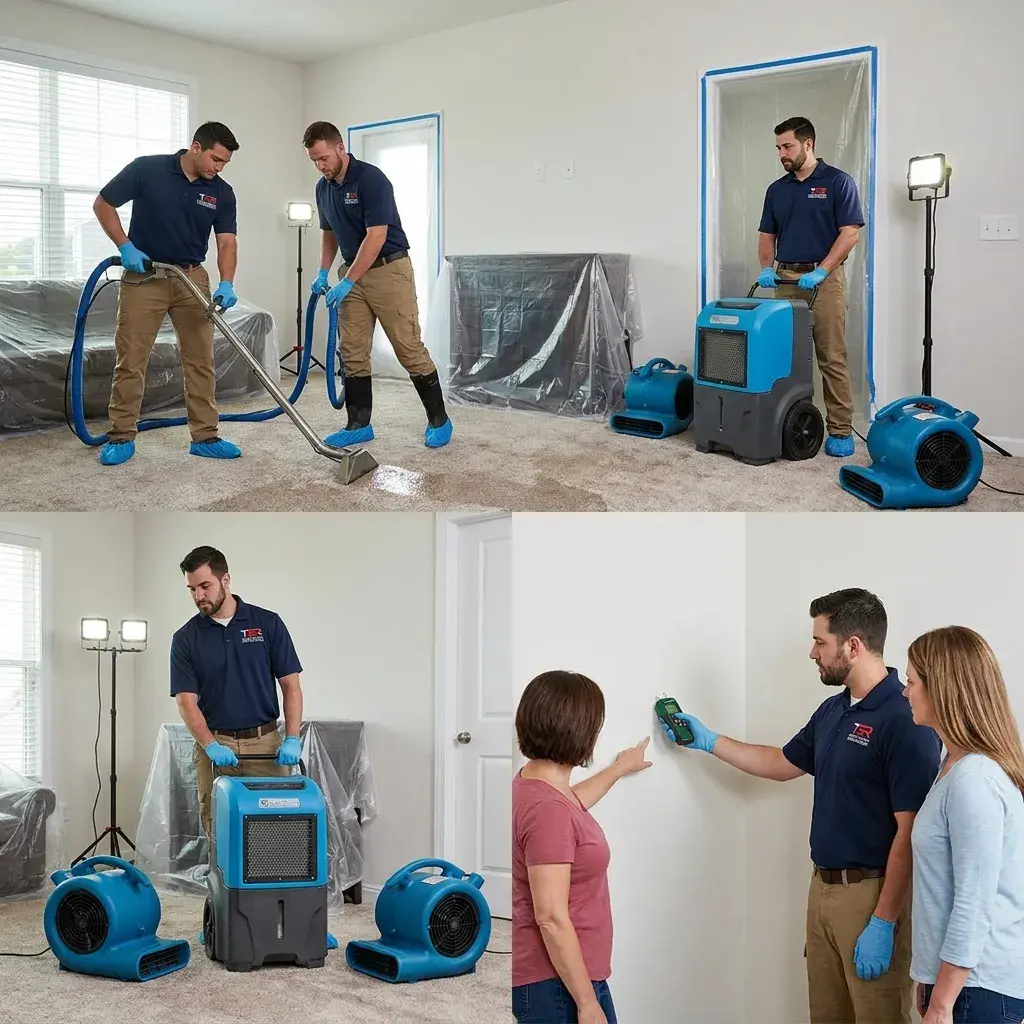
Plumbing infrastructure operates silently behind luxury finishes, custom cabinetry, and high-end flooring. However, even the most meticulous estates in Beverly Hills and surrounding Southern California communities remain vulnerable to sudden plumbing failures. Whether caused by a high-pressure supply line failure, an undetected slab leak beneath imported tile, or a main line sewage backup during heavy storms, sudden indoor water intrusion presents an immediate threat to your living space, indoor air quality, and property value.
Securing a specialized water damage service is about far more than soaking up standing water with mop equipment or setting up household fans. Professional mitigation requires certified engineering principles, precision moisture detection technology, and rapid biohazard containment to preserve high-value structural components.
Beyond Visible Water: Recognizing the Signs of Hidden Property Leaks
The most hazardous water incidents are often the ones you cannot see right away. A slow, hidden leak behind plaster walls or under subfloors can quietly cause structural decay for weeks before manifesting visible symptoms on your ceilings or baseboards.
                  [ HIDDEN MOISTURE SOURCES ]
                               │
       ┌───────────────────────┼───────────────────────┐
       ▼                       ▼                       ▼
[ Slab Leaks ]          [ Pinhole Leaks ]      [ Supply Line Failures ]
Under tile/hardwood     Behind custom walls    Behind luxury appliances
       │                       │                       │
       └───────────────────────┼───────────────────────┘
                               ▼
            [ UNCHECKED STRUCTURAL DETERIORATION ]
                               │
       ┌───────────────────────┴───────────────────────┐
       ▼                                               ▼
[ Subfloor Rot & Delamination ]              [ Toxic Mold & Fungal Growth ]
1. Slab Leaks Beneath High-End Flooring
Concrete foundations are subject to minor soil shifts and pressure fluctuations. When copper pipes within or under a concrete slab develop pinhole corrosion, water seeps upward into subflooring. Signs include unexplained warm spots on hardwood or tile, rising water utility bills, or a faint damp odor near ground-level rooms.
2. Wall Cavity Moisture & Pinhole Corrosion
High-pressure plumbing lines servicing upper-floor bathrooms can develop micro-fractures. Water travels along studs and joists, saturating insulation and plaster. Before water stains appear, you may notice warped paint, peeling wallpaper, or localized drywall softening.
3. Appliance Supply Line Stress
Modern estates feature complex water systems, including multi-zone ice makers, built-in espresso machines, and steam showers. Flexible supply hoses under continuous pressure can rupture, releasing hundreds of gallons of water in a few short hours if left unattended.
Understanding Water Categories: Clean, Gray, and Black Water
Not all water losses are created equal. Professional water damage service protocols depend directly on the level of contamination present in the water source.
| Water Category | Common Source | Hazard Level | Primary Treatment Strategy |
|---|---|---|---|
| Category 1 (Clean Water) | Burst clean water supply lines, sink overflows, melted ice | Low initial risk; becomes hazardous if left untreated over 24–48 hours | Immediate extraction, directional air movement, closed-loop dehumidification. |
| Category 2 (Gray Water) | Washing machine discharge, dishwasher backup, sump pump failure | Moderate; contains chemical compounds, skin cells, and organic debris | Structural extraction, removal of affected soft padding, biocide application. |
| Category 3 (Black Water) | Sewage main line back-ups, rising groundwater, stagnant standing water | High risk; carries pathogenic microbes, bacteria, heavy toxins | Full biohazard containment, HEPA air scrubbing, non-porous surface sanitization. |
The 5-Stage Professional Water Damage Service Workflow
Restoring a property to its pre-loss condition requires a systematic, science-backed drying protocol designed to prevent secondary damage such as warping, dry rot, and toxic mold cultivation.
┌──────────────────────────────────────────────────────────┐
│ STAGE 1: Emergency Containment & Infrared Moisture Mapping│
└────────────────────────────┬─────────────────────────────┘
                             │
                             ▼
┌──────────────────────────────────────────────────────────┐
│ STAGE 2: High-Capacity Extraction & Biohazard Removal    │
└────────────────────────────┬─────────────────────────────┘
                             │
                             ▼
┌──────────────────────────────────────────────────────────┐
│ STAGE 3: Industrial Dehumidification & HEPA Filtration   │
└────────────────────────────┬─────────────────────────────┘
                             │
                             ▼
┌──────────────────────────────────────────────────────────┐
│ STAGE 4: Structural Salvage & Precision Thermal Drying   │
└────────────────────────────┬─────────────────────────────┘
                             │
                             ▼
┌──────────────────────────────────────────────────────────┐
│ STAGE 5: Antimicrobial Sanitization & Final Moisture Log │
└────────────────────────────┘
Stage 1: Emergency Containment & Infrared Moisture Mapping
Upon arrival, technicians establish containment barriers to stop airborne spores or humidity from spreading into uninfluenced living quarters. Using FLIR thermal imaging cameras and pinless moisture meters, we build a exact map of hidden moisture pockets inside walls, subfloors, and ceiling cavities.
Stage 2: Heavy Extraction & Biohazard Sanitization
Extracting liquid water is up to 500 times more efficient than relying on evaporation alone. Industrial truck-mounted pumps and weighted extraction tools remove surface and subsurface liquid rapidly from carpets, rug pads, and stone floor joints.
Stage 3: Closed-Loop Dehumidification & HEPA Air Scrubbing
To pull trapped moisture out of dense construction materials like structural studs and plaster, we install low-grain refrigerant (LGR) or desiccant dehumidifiers. Concurrently, HEPA air scrubbers filter airborne dust, allergens, and microbial spores to safeguard indoor air quality.
Stage 4: Structural Salvage & Controlled Drying
Preserving original architectural detail is a top priority. Injectidry systems pump warm, dry air directly into wall cavities through small holes hidden behind baseboards, salvaging expensive drywall and custom woodwork without requiring major teardowns.
Stage 5: Antimicrobial Application & Final Clearance Logging
All exposed surfaces are treated with EPA-registered biocides to eliminate lingering bacteria, fungi, and odors. Daily moisture monitoring continues until every structural element reaches dry standard benchmarks.
Real-Life Scenarios: How Rapid Response Protects Beverly Hills Homes
Scenario A: Hidden Master Bath Leak Above a First-Floor Art Gallery
A slow supply-line leak under a second-story soaking tub caused water to puddle over a ground-floor ceiling adorned with custom crown molding. By deploying infrared moisture mapping and directional floor-drying mats immediately, the restoration crew pulled deep-seated water out through the upper floor subfloor, saving the ceiling structure and surrounding artwork without aggressive demolition.
Scenario B: Lower-Level Sewage Back-up After Heavy Rainstorms
Heavy downpours overwhelmed municipal storm lines, forcing gray and black water back through a basement shower drain. Technicians implemented strict Category 3 biohazard protocols, isolating the entire subterranean level, extracting contaminated fluids, removing impacted lower drywall, and applying multi-stage hospital-grade sanitization.
Frequently Asked Questions (Q&A)
How do I know if I need a water damage service or just a plumber?
A licensed plumber stops the plumbing leak, fixes broken pipes, or clears clogged main lines. A specialized water damage service handles everything after the leak: removing standing water, drying saturated walls and subfloors, preventing mold growth, sanitizing contaminated spaces, and restoring structural materials back to pre-loss condition. Both services are often needed during a major plumbing emergency.
Can water damage occur beneath luxury materials like marble, travertine, or hardwood?
Yes. Water easily migrates through grout lines, subfloor seams, and expansion gaps beneath stone tile or hardwood. Once trapped beneath stone or wood, trapped moisture causes cupping, cracking, dark staining, and efflorescence. Professional restoration uses high-vacuum floor mats and dehumidification to extract trapped moisture without removing expensive stone or hardwood planks whenever possible.
How long does the complete structural drying process take?
The average drying process takes between 3 to 5 days, depending on the water category, volume, and material porosity (such as dense plaster versus standard drywall). Technicians use moisture meters to track daily drying logs until the structure reaches certified dry standard levels.
How quickly does sewage or gray water become dangerous?
Gray and black water contain active organic matter, chemical residues, and harmful pathogens that begin multiplying rapidly within hours. Immediate containment, specialized extraction, and antimicrobial sanitization are required immediately to prevent health hazards and persistent odors.
Will my property insurance cover structural water damage restoration?
Most comprehensive property policies cover sudden and accidental water events, such as pipe bursts, appliance supply line failures, or water heater ruptures. Detailed moisture logs, thermal images, and itemized restoration reports prepared by certified professionals streamline the insurance claims process.
Why Choose Tech Solution Restoration?
When structural leaks or sudden flooding threaten your property, you need an experienced, rapid-response partner dedicated to precision, transparency, and high-quality craftsmanship. Tech Solution Restoration provides comprehensive property mitigation designed specifically for Beverly Hills residences and commercial properties.
- 24/7 Immediate Emergency Dispatch: Our emergency response team responds around the clock to stop structural damage immediately.
- Cutting-Edge Moisture Detection: We utilize thermal imaging cameras, pinless moisture meters, and specialized cavity drying tools to protect high-end finishes.
- Complete End-to-End Mitigation: From initial biohazard extraction and moisture control to complete structural rebuilding, we handle every detail seamlessly.
- Direct Insurance Coordination: We provide comprehensive documentation, moisture tracking charts, and direct claims processing with major insurance carriers.
Contact Our Beverly Hills Restoration Specialists
Protect your property investment from long-term moisture and structural damage. Contact our local team today for immediate 24/7 assistance:
- Brand Name: Tech Solution Restoration
- Address: 8909 W Olympic Blvd Unit 208, Beverly Hills, CA 90211
- Phone Number: (310) 857-8767
- 24/7 Emergency Line: Contact us right away for rapid moisture extraction, structural drying, and full-service property recovery!