
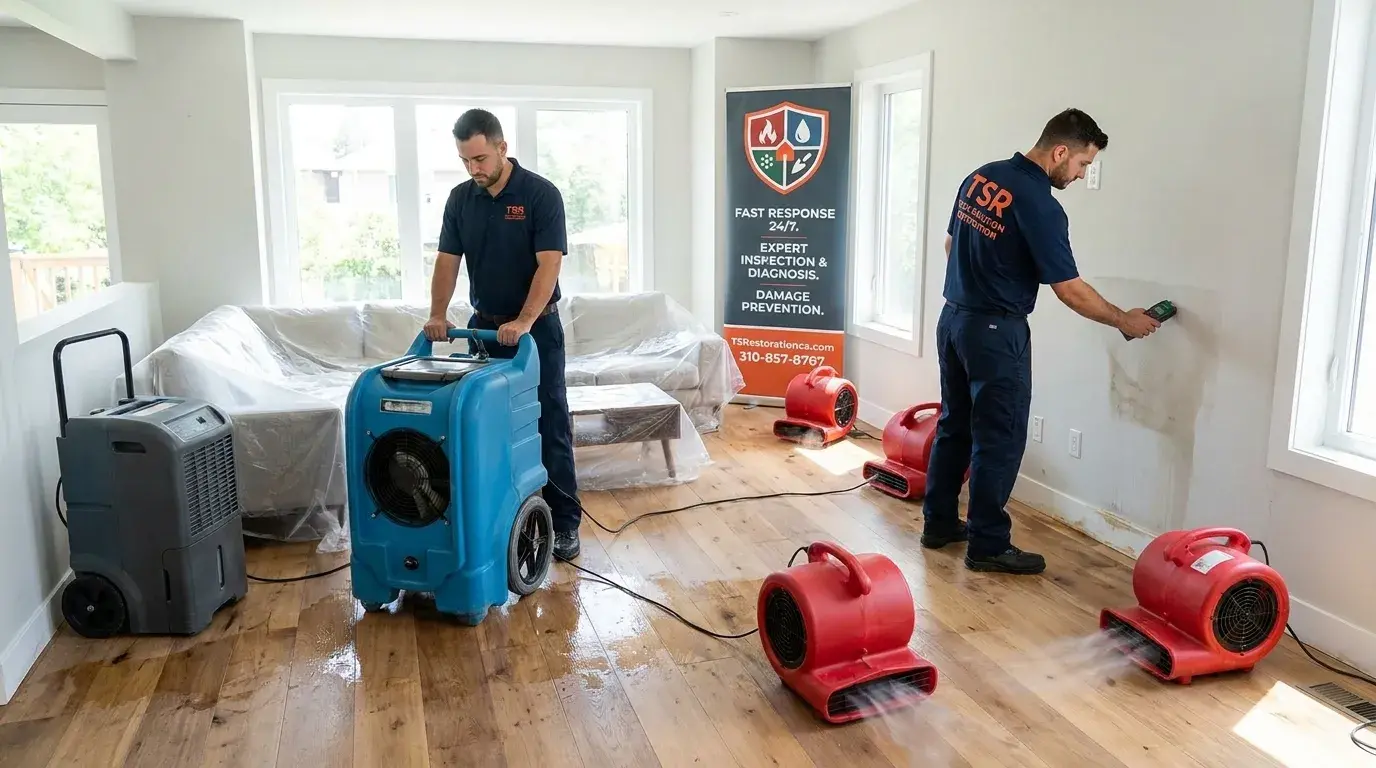
Living in Beverly Hills comes with high standards for property maintenance, safety, and luxury. However, behind elegant architecture and custom interiors lies a threat common to any estate: unexpected water damage. Whether caused by a burst pipe behind custom millwork, a malfunctioning supply line in a high-end kitchen, or sudden structural flooding, liquid intrusion requires immediate, tactical intervention.
Understanding the fundamentals of water damage restoration can mean the difference between a minor cleanup project and an expensive, months-long structural rebuild. This guide walks you through real-world scenarios, step-by-step restoration protocols, and critical steps to protect your property investment.
The Hidden Danger: What Happens When Water Enters Your Walls?
Water damage is rarely confined to the visible puddle on your hardwood floor or stone tile. Moisture naturally moves toward dry materials through capillary action, traveling upward inside drywall, beneath subflooring, and into insulation within minutes.
[ Water Source / Leak ]
          │
          ▼
 [ Visible Puddles ] ──► (Trapped under baseboards & subfloors)
          │
          ▼
 [ Rapid Absorption ] ──► (Drywall, insulation, & custom millwork)
          │
          ▼
 [ 24–48 Hours ] ──► (Microbial growth & structural deterioration)
In typical Beverly Hills residences—where custom cabinetry, plaster, solid hardwood, and imported stone are prominent—trapped water poses severe structural and financial risks:
- Hardwood Flooring Warping: Solid wood planks absorb water from below, leading to cupping, crowning, or complete buckling if not dried with specialized heat systems.
- Drywall Softening: Standard drywall loses structural integrity when saturated, creating an ideal environment for mold growth within 24 to 48 hours.
- Cabinetry and Millwork Delamination: Water trapped beneath vanity units or kitchen islands causes base materials to swell, often ruining expensive custom carpentry.
- Sub-Surface Biofilm: Stagnant water under flooring creates hidden pockets of bacteria and fungi that produce unpleasant odors.
Step-by-Step Protocol: The Professional Restoration Process
A successful mitigation strategy relies on industrial-grade equipment, precise moisture tracking, and rapid execution. When handling water damage restoration in luxury and high-value properties, professionals follow a proven phased approach.
┌──────────────────────────────────────────────────────────┐
│ PHASE 1: Emergency Inspection & Thermal Imaging          │
└────────────────────────────┬─────────────────────────────┘
                             │
                             ▼
┌──────────────────────────────────────────────────────────┐
│ PHASE 2: Commercial Water Extraction & Containment       │
└────────────────────────────┬─────────────────────────────┘
                             │
                             ▼
┌──────────────────────────────────────────────────────────┐
│ PHASE 3: Structural Drying & Dehumidification            │
└────────────────────────────┬─────────────────────────────┘
                             │
                             ▼
┌──────────────────────────────────────────────────────────┐
│ PHASE 4: Sanitization, Antimicrobial & Moisture Testing  │
└──────────────────────────────────────────────────────────┘
Phase 1: Emergency Inspection and Thermal Imaging
Visual inspections alone are insufficient for detecting hidden leaks. Moisture mapping uses non-invasive infrared (thermal) cameras and moisture meters to pinpoint exact boundaries of water migration behind walls and underneath subfloors without tearing down structures unnecessarily.
Phase 2: Commercial Extraction
Before drying can begin, standing water must be removed. Heavy-duty truck-mounted water extractors and specialized submersible pumps remove hundreds of gallons of water quickly, significantly cutting down total drying time.
Phase 3: Targeted Structural Drying
Standard fans are inadequate for deep structural drying. Certified technicians deploy directional air movers combined with low-grain refrigerant (LGR) or desiccant dehumidifiers. These units pull deep-seated moisture out of structural timbers, subfloors, and plaster walls while controlling relative humidity to prevent secondary mold growth.
Phase 4: Sanitization and Antimicrobial Application
Water carrying contaminants requires specialized treatment. EPA-registered antimicrobial agents are applied to affected surfaces to eliminate bacteria and fungi, ensuring indoor air quality remains safe and healthy for your family.
Real-World Scenarios: Common Water Emergencies in Beverly Hills
Scenario A: High-Pressure Appliance Line Failure
A pinhole leak in a braided stainless-steel refrigerator supply line floods a kitchen overnight. Water seeps under custom cabinetry and into the basement or floor below. Immediate extraction, kick-plate removal, and injection drying preserve the cabinetry while thoroughly drying the subfloor.
Scenario B: Multi-Story Supply Line Burst
A second-story bathroom pipe bursts while the family is out for the weekend. Water migrates through the ceiling, saturating lower-level plaster walls, recessed light fixtures, and hardwood floors. Rapid containment zones, ceiling drainage, and controlled drying prevent total structural collapse and save original architectural details.
Essential Questions & Answers (Q&A)
How quickly does mold start growing after water damage occurs?
Microbial spores naturally present in the air can germinate and form active mold colonies within 24 to 48 hours under appropriate moisture and temperature conditions. This short window is why immediate professional water extraction and dehumidification are critical.
Can custom hardwood floors be saved after being flooded?
Yes, in many cases hardwood floors can be saved if mitigation begins rapidly. Specialized floor drying mats connected to high-vacuum systems draw moisture directly out through the top of the wood planks, reversing cupping before permanent damage occurs.
What is the difference between water mitigation and water restoration?
- Water Mitigation focuses on immediate loss prevention: stopping leaks, extracting standing water, removing unsalvageable materials, and setting up drying equipment.
- Water Restoration encompasses the complete recovery phase, including drywall repair, repainting, flooring reconstruction, and returning the property to its pre-loss condition.
Will insurance cover emergency water damage restoration services?
Most standard homeowners insurance policies cover sudden and accidental water damage, such as a burst pipe or appliance failure. However, gradual leaks caused by neglected maintenance are typically excluded. Professional restoration teams document moisture readings and dry-out logs to assist with insurance claims.
Why Choose Tech Solution Restoration?
When water emergencies disrupt your home or business, you need a local partner who responds immediately with expertise, discretion, and advanced restoration technology. Tech Solution Restoration is dedicated to protecting Beverly Hills properties with fast, professional, and full-service restoration solutions.
- 24/7 Emergency Rapid Response: Our certified technicians arrive quickly to halt water migration and mitigate damage immediately.
- Advanced Drying & Detection Technology: We utilize infrared thermal imaging, truck-mounted extraction units, and LGR dehumidification systems to protect high-end materials.
- Insurance Coordination: We handle comprehensive documentation, moisture logging, and direct billing with your insurance provider to make the claims process seamless.
- Comprehensive Property Care: From initial extraction and mold prevention to full structural reconstruction, we handle every step with precision.
Contact Our Beverly Hills Team
Don’t let water damage compromise your investment. Reach out to our local team today for immediate 24/7 assistance:
- Brand Name: Tech Solution Restoration
- Address: 8909 W Olympic Blvd Unit 208, Beverly Hills, CA 90211
- Phone Number: (310) 857-8767
- 24/7 Emergency Line: Contact us immediately to dispatch a certified team to your property!