
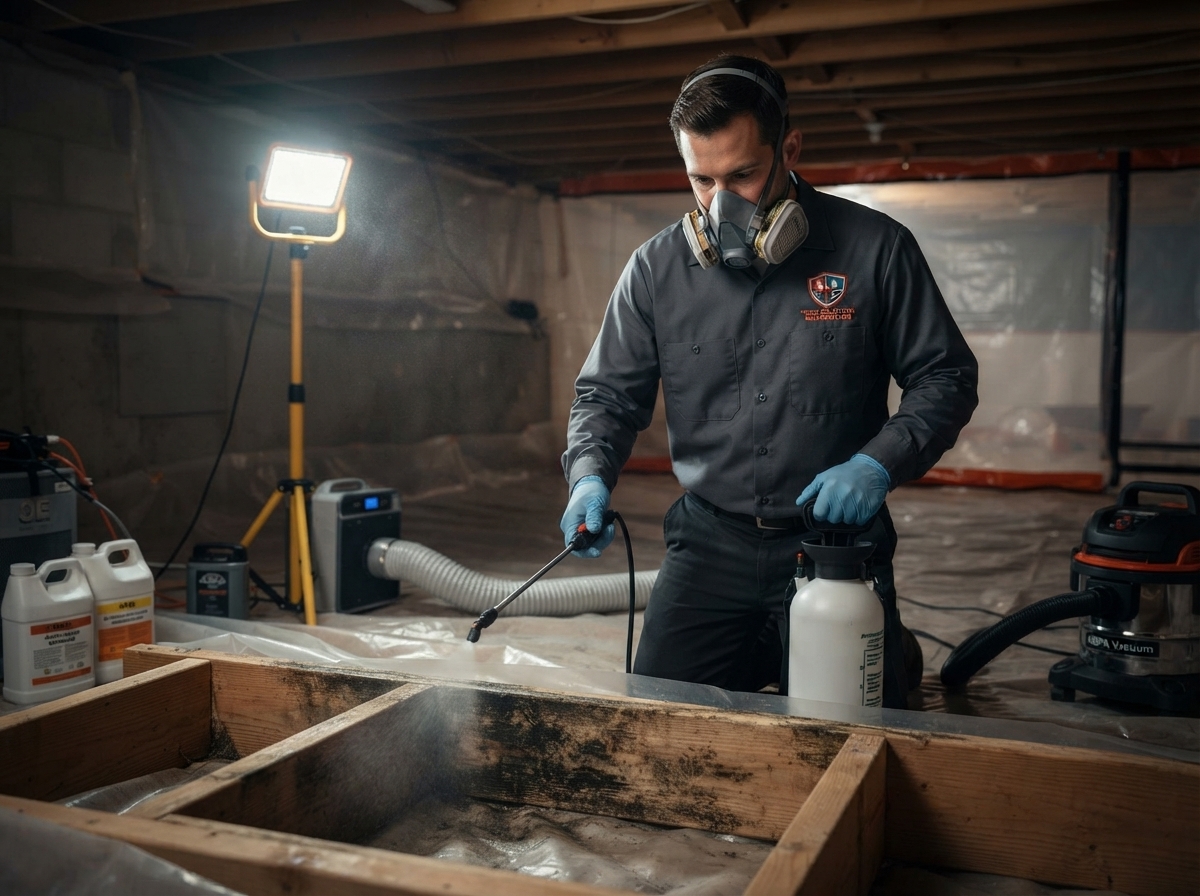
Microscopic mold spores are a constant, natural component of outdoor air. However, when hidden moisture leaks—such as slow copper pipe corrosion inside Trousdale Estates plaster walls, unvented steam shower condensation in the Beverly Hills Flats, or drainage seepage along Benedict Canyon canyon slopes—introduce persistent dampness indoors, mold spores colonize rapidly.
Within 24 to 48 hours, active amplification begins, releasing volatile organic compounds (VOCs), pungent musty odors, and microscopic mycotoxins into indoor air spaces.
Executing professional, certified mold removal is vital to protecting indoor environmental safety, preserving fine architectural materials, and eliminating the root moisture causes driving fungal growth.
The Chemical Mechanics of Mold Amplification: Surface vs. Structural Contamination
Not all mold growth behaves the same way. Understanding how fungal hyphae interact with different construction materials dictates whether surfaces can be cleaned or require controlled structural removal.
| Material Surface Type | Fungal Penetration Depth | Required Removal Protocol |
| Non-Porous Surfaces (Glass, Sealed Granite, Metals) | Surface-level hyphae attachment; spores rest on dust layer without deeply penetrating the substrate. | HEPA vacuuming, EPA-registered antimicrobial wash, and damp wiping within isolation zones. |
| Semi-Porous Surfaces (Hardwood Studs, Plywood, Concrete) | Root systems (hyphae) penetrate sub-surface pores, especially under high humidity conditions. | HEPA vacuuming, abrasive wire-brushing, media blasting, followed by clear-seal anti-fungal encapsulation. |
| Porous Surfaces (Drywall, Plaster, Insulation, Carpet) | Deep structural penetration; fungal roots digest organic cellulose fibers within the material itself. | Mandatory Removal: Controlled cutting under negative pressure containment and safe disposal. |
The Hidden Danger: Systemic HVAC & Ductwork Contamination
One of the most frequent causes of widespread property contamination in multi-zone Beverly Hills estates is hidden mold growth inside central heating and cooling systems.
When high indoor humidity combines with clogged AC condensate pans or uninsulated ductwork, mold spores colonize the dark, damp interior of air handlers and supply trunks.
┌────────────────────────────────────────────────────────┐
│   LOCALIZED MOISTURE / HVAC CONDENSATION LEAK          │
└───────────────────────────┬────────────────────────────┘
                            │
                            ▼
┌────────────────────────────────────────────────────────┐
│   SPORE GERMINATION INSIDE HVAC SUPPLY PLENUMS         │
└───────────────────────────┬────────────────────────────┘
                            │
                            ▼
┌────────────────────────────────────────────────────────┐
│   SYSTEMIC AIRBORNE DISPERSAL TO CLEAN ROOMS           │
└───────────────────────────┬────────────────────────────┘
                            │
                            ▼
┌────────────────────────────────────────────────────────┐
│   REQUIRED: FULL HVAC DECONTAMINATION & AIR SCRUBBING   │
└────────────────────────────────────────────────────────┘
When the central ventilation system kicks on, it acts as a distribution engine, blowing millions of airborne spores directly into bedrooms, living areas, and high-value art collections. Our certified technicians isolate multi-zone HVAC units, set up dedicated negative pressure containment, and execute deep duct decontamination to protect indoor air quality.
Simultaneous Containment & Air Scrubbing Workflow
To ensure that mold removal does not contaminate adjacent clean rooms, Tech Solution Restoration executes a strict, 4-stage containment and air filtration workflow:
| Phase | Environmental Control Workflow | Key Restoration Action |
| Phase 1: Physical Isolation | Critical Poly Containment | Heavy-duty 6-mil plastic barriers seal off doorways, vents, and passages leading to clean areas. |
| Phase 2: Pressure Control | Negative Air Dynamics | High-CFM negative-air machines exhaust air outside, preventing spores from escaping containment. |
| Phase 3: Environmental Filtration | HEPA Air Scrubbing | Industrial air scrubbers continuously filter ambient air, capturing particles down to 0.3 microns. |
| Phase 4: Material Neutralization | Antimicrobial Treatment | Exposed framing is treated with EPA-registered anti-fungal solutions and protective encapsulant coatings. |
White-Glove Content Care & Fine Art Protection
High-end residences often contain valuable furnishings, custom textiles, and irreplaceable artwork that require protection during structural mold removal. Our specialized content team provides:
- On-Site Isolation Chambers: Unaffected furniture is sealed inside protective poly chambers within the home if off-site transport is not required.
- HEPA Vacuuming & Cleaning: Non-porous luxury decor items undergo multi-stage HEPA filtration vacuuming and specialized antimicrobial damp wiping.
- Off-Site Climate-Controlled Storage: Highly delicate assets are logged into a barcoded digital inventory and moved off-site to our secure facility until structural restoration is complete.
Full-Lifecycle Architectural Reconstruction
Removing mold is only half the battle. As a licensed general contractor, Tech Solution Restoration transitions seamlessly from environmental remediation to full architectural rebuilds:
- Replacing cut drywall with moisture-resistant gypsum framing.
- Crafting and applying matching custom plaster and crown molding textures.
- Installing matching imported marble, travertine, or custom hardwood flooring.
- Applying stain-blocking primers and low-VOC paints to restore your home to pristine, pre-loss condition.
Real-World Case Studies: Local Mold Removal
Case 1: Unvented Steam Shower Leak in the Beverly Hills Flats
A pinhole plumbing failure behind a master suite steam shower saturated the mortar bed, causing hidden black mold growth behind custom marble wall slabs. Emergency crews established negative pressure containment, carefully removed affected drywall backing while preserving adjacent stone, applied anti-fungal encapsulants to studs, and completed full wall reconstruction with an independent clearance certificate.
Case 2: Subterranean Vault Contamination in Trousdale Estates
Groundwater intrusion behind a lower-level home theater wall created widespread fungal growth across 120 square feet of acoustic insulation. Our team installed isolation barriers, executed white-glove pack-out services for high-end audio equipment, removed saturated insulation under negative air pressure, and fully rebuilt the theater framework to original specifications.
Frequently Asked Questions (Q&A)
How does mold removal differ from basic mold cleaning?
Basic surface wiping only removes visible growth on top of materials, leaving deep-rooted fungal hyphae intact inside porous studs or drywall. Certified mold removal involves setting up physical containment under negative air pressure, removing contaminated porous materials, HEPA air filtering, and treating framing to permanently eliminate fungal roots.
What causes mold to grow inside central HVAC systems?
Mold grows inside HVAC systems when excess indoor humidity or clogged condensate drain pans create standing moisture on cooling coils and duct linings. Once spores land on damp dust layers inside ductwork, the dark, unventilated environment allows colonies to spread rapidly.
Will my homeowners insurance cover the cost of mold removal?
Insurance policies typically cover mold removal if it stems directly from a covered, sudden water emergency—such as a burst copper pipe, water heater rupture, or appliance line failure. We document all moisture levels, capture thermal images, and submit direct Xactimate line-item estimates to your adjuster.
Do I need to leave my home during the mold removal process?
For minor, isolated projects with proper negative-pressure containment, living in unaffected areas of the home is often possible. However, for large-scale remediation involving central HVAC ducts or extensive drywall removal, temporary relocation is recommended to avoid exposure to active air scrubbing equipment and containment zones.
Need Immediate Assistance? Contact Our Beverly Hills Team Today
When hidden moisture or mold growth threatens your indoor air quality and property value, turn to local certified specialists. Tech Solution Restoration provides 24/7 rapid-response moisture inspections, IICRC-compliant containment, HVAC duct decontamination, and full structural rebuilds across Beverly Hills and adjacent communities.
Don’t let hidden mold damage your estate. Call our certified team today for immediate dispatch!
- Brand Name: Tech Solution Restoration
- Address: 8909 W Olympic Blvd Unit 208, Beverly Hills, CA 90211
- Phone Number: (310) 857-8767
- Emergency Line: Available 24 Hours / 7 Days a Week
READ MORE: