
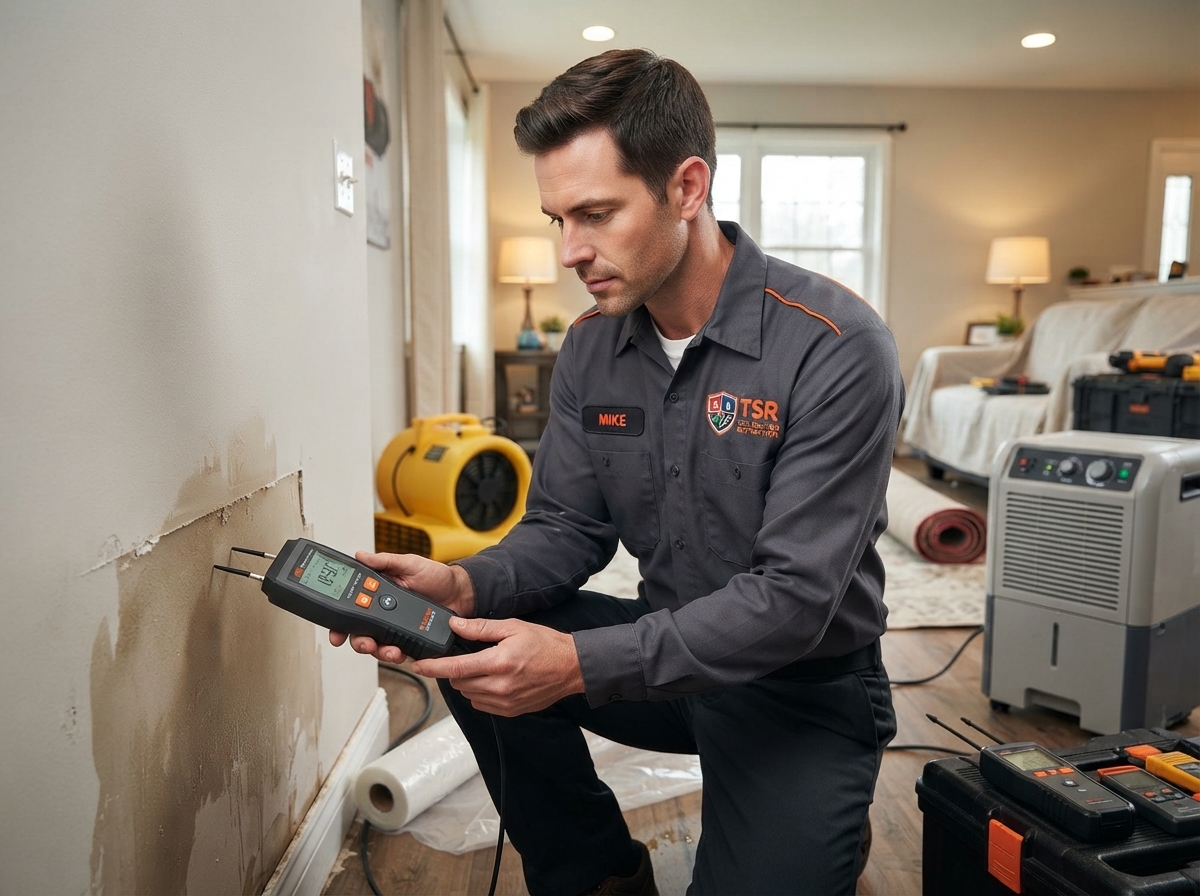
Architectural sophistication and high-end construction define residential estates and commercial properties throughout Beverly Hills. However, even the most meticulously engineered properties remain vulnerable to internal plumbing failures, high-pressure supply line bursts, subterranean slab leaks, and sudden storm water intrusion. When clean or contaminated water saturates custom hardwood flooring, imported marble, or multi-layered plaster walls, every minute counts.
Executing immediate, certified water damage restoration is critical to halting moisture migration, preventing costly structural rot, and protecting property value. Understanding the scientific principles behind commercial moisture extraction and thermal structural drying empowers property owners to take decisive action during an emergency.
The Hidden Mechanics of Moisture Migration in Luxury Estates
When liquid intrudes into a residential or commercial building, it does not remain confined to open floor surfaces. Water actively seeks dry materials through capillary action, moving upward inside wall cavities, soaking insulation, and pooling beneath subfloors.
1. Hardwood Flooring Cupping and Subfloor Saturation
Solid wood planks, custom parquet, and engineered hardwoods quickly absorb water through unsealed expansion joints and tongue-and-groove edges. As the underside of the wood expands faster than the dry top surface, the planks cup or crown. Without specialized injection drying mats, subfloor plywood deteriorates, creating persistent odors and structural instability.
2. Multi-Layered Drywall and Wall Cavity Absorption
Standard gypsum drywall absorbs water rapidly from floor level upward. Trapped behind baseboards and custom crown molding, hidden moisture builds high relative humidity inside dark wall cavities. Within 24 to 48 hours, these warm, enclosed voids become ideal environments for fungal growth and structural degradation.
3. Sub-Surface Trapped Water in Natural Stone
Imported stone surfaces such as marble, travertine, and limestone feature porous grout lines and micro-fractures. Water seeping beneath stone tiles causes efflorescence—white, powdery salt deposits that rise to the surface—and degrades thin-set mortars, causing tiles to loosen and crack over time.
Structural Moisture Categories: Clean, Contaminated, and Toxic Fluids
The specific protocols used during a water damage restoration project depend entirely on the level of chemical or biological contamination present in the water source.
Category 1: Clean Water Intrusion
Originating from sanitary sources such as burst freshwater supply lines, melting ice machines, or overflowing upper-floor bathtubs. While initially low-risk, Category 1 water rapidly degrades into Category 2 if left untreated for more than 24 hours in warm indoor environments.
Category 2: Gray Water Intrusion
Carries significant chemical, physical, or biological contamination. Common sources include dishwasher backups, washing machine discharge, and sump pump overflows. Materials exposed to gray water require heavy extraction, anti-microbial treatments, and selective removal of porous padding.
Category 3: Black Water Biohazards
Presents extreme health risks due to pathogenic microbes, bacteria, and sewage toxins. Sources include municipal sewer main backups, rising river or ocean groundwater, and stagnant standing water. Category 3 incidents require strict negative-pressure isolation, full biohazard extraction, and hospital-grade sanitization protocols.
The 5-Stage Scientific Restoration Workflow
Restoring a water-damaged estate to pre-loss condition requires specialized equipment, precise thermal diagnostics, and daily moisture monitoring until certified dry standards are achieved.
Stage 1: Emergency Inspection & Non-Invasive Thermal Mapping
Restoration specialists conduct an immediate on-site inspection using FLIR thermal imaging cameras and pinless moisture meters. Thermal imaging detects invisible temperature differences caused by evaporative cooling, pinpointing exact moisture boundaries behind plaster walls, beneath stone floors, and inside ceiling joists without invasive demolition.
Stage 2: High-Volume Liquid Extraction
Extracting water in its liquid state is up to 500 times more efficient than relying on evaporation alone. Certified technicians deploy industrial truck-mounted extraction units and weighted floor mats to extract hundreds of gallons of deep-seated liquid directly from carpets, subfloors, and tile grout lines.
Stage 3: Structural Containment & Environmental Controls
To accelerate drying and prevent cross-contamination, technicians set up heavy-duty poly plastic containment barriers around affected zones. Commercial air scrubbers equipped with HEPA filters continuously process ambient air, removing dust, allergens, and airborne microbial spores.
Stage 4: Closed-Loop LGR & Desiccant Dehumidification
Targeted structural drying utilizes low-grain refrigerant (LGR) or industrial desiccant dehumidifiers paired with high-velocity directional air movers. This closed-loop setup creates extreme low-humidity conditions, forcing moisture trapped inside structural studs and subflooring out into the air where it is condensed and pumped safely outside.
Stage 5: Antimicrobial Sanitization & Final Moisture Verification
All exposed framing, subfloors, and structural elements receive EPA-registered antimicrobial treatments to eliminate lingering bacteria and prevent fungal growth. Daily moisture readings are recorded in dry-out logs until every building material reaches its baseline equilibrium moisture content.
Real-World Scenarios: Managing Structural Water Emergencies
Scenario 1: Hidden Slab Leak Beneath First-Floor Marble Tile
A pinhole copper pipe corrosion leak beneath a luxury estate’s entry hall flooded sub-surface mortar beds, threatening custom marble flooring. Technicians utilized non-invasive moisture meters to map the saturation footprint, applied vacuum floor-drying mats directly over grout lines, and deployed desiccant dehumidifiers to draw water out through the stone surface without tearing up the tile.
Scenario 2: Multi-Story Supply Line Burst in a Beverly Hills Commercial Building
A third-floor commercial restroom supply line burst overnight, sending thousands of gallons of water through two lower floors, saturating office ceilings, executive desks, and computer networks. Emergency crews established multi-zone containment, deployed high-capacity water extractors, utilized cavity injection wall drying systems behind baseboards, and restored full office operations within four days.
Frequently Asked Questions (Q&A)
How quickly should professional water damage mitigation begin after a leak?
Mitigation must begin immediately—ideally within 1 to 2 hours of discovery. Standing water saturates porous building materials rapidly, and active microbial growth can begin forming inside wall cavities and subfloors within 24 to 48 hours.
Can custom hardwood floors be dried and saved after a major water flood?
Yes, in many cases hardwood floors can be fully saved if extraction begins quickly. Specialists deploy specialized floor-drying mat systems connected to high-vacuum pumps. These mats draw trapped moisture upward directly through the wood fibers, reversing plank cupping before permanent warping occurs.
What is the difference between water mitigation and complete water damage restoration?
Water mitigation involves immediate emergency response: stopping water flow, extracting liquid water, setting up containment, and installing drying equipment to prevent further structural loss. Complete water damage restoration includes the full recovery phase that follows: replacing drywall, repairing flooring, painting, and restoring the property to its exact pre-loss condition.
Will my property insurance cover emergency water damage restoration services?
Most standard property and commercial insurance policies cover sudden and accidental water losses, such as appliance supply line ruptures, burst pipes, and water heater failures. Restoration experts provide detailed thermal imagery, moisture logs, and itemized damage reports to handle claims directly with your insurance adjuster.
Why Choose Tech Solution Restoration?
When sudden water emergencies threaten your home or commercial facility, you need an experienced, certified local partner who responds immediately with advanced drying technology, discretion, and technical expertise. Tech Solution Restoration provides rapid, full-service property recovery designed specifically for Beverly Hills residences and commercial properties.
- 24/7 Immediate Emergency Dispatch: Our certified technicians arrive fully equipped to stop water migration, extract standing water, and stabilize your property immediately.
- Advanced Non-Invasive Diagnostics: We utilize FLIR thermal imaging cameras, pinless moisture sensors, and targeted cavity-drying systems to protect high-end architectural finishes.
- Comprehensive Turnkey Solutions: From initial water extraction and biohazard sanitization to structural dry-out, drywall repair, and complete reconstruction, we handle every detail.
- Direct Insurance Claims Processing: We compile detailed moisture charts, thermal inspection reports, and itemized billing to work directly with major insurance carriers for a seamless recovery process.
Contact Our Beverly Hills Specialists
Don’t let hidden moisture compromise your property structure, indoor air quality, or real estate value. Contact our local team today for immediate 24/7 expert assistance:
- Brand Name: Tech Solution Restoration
- Address: 8909 W Olympic Blvd Unit 208, Beverly Hills, CA 90211
- Phone Number: (310) 857-8767
- 24/7 Emergency Line: Call us immediately to dispatch a certified emergency restoration crew to your property!
READ MORE: